

 The Lazy Dungeon Master
by Michael E. Shea
My rating: 2 of 5 stars
The Lazy Dungeon Master / 978-1073741113
This book was clearly a labor of love and I hesitate to give it a poor rating, but it simply was not helpful to me. Others might find my experience useful when considering whether or not to purchase for themselves.
Some background: I have been dungeon mastering for 10+ years. I have run official modules as well as completely homebrew worlds I made up myself. I have run in-person tables and online games, both in voice/video calls and in text-based forum formats. I am currently running the official Curse of Strahd module in an online game over Discord. I frequently find myself pressed for prep time, and I was hoping this book might help me optimize my preparation so that I could spend less time preparing and more time playing.
First, to start with, this book is VERY oriented around the expectation that you're DMing a completely homebrew world. A lot of the "lazy" guidelines basically boil down to not going overboard on worldbuilding, and to confine your efforts to things the players will actually see and interact with. This is true: if you're building an adventure in Texas, you don't need to nail down everything that's happening in Alaska. But this is also largely unhelpful for anyone running a prewritten adventure, as I currently am.
Second, and similar to above, the authors are extremely concerned that you may be spending too much time building homebrew monsters rather than using ones from published sources. Again, this is good advice but largely unhelpful to anyone already doing that. I don't think I've ever homebrewed a monster; they are correct that there are just so many already published ones. This might be a difference between the 2020s and the 1980s, but in the hundreds of games I've attended as a player, I don't think I've ever seen any DM pull out a homebrewed-from-scratch monster. My experience is that we usually take a prepublished one and tweak as needed. This particular advice may be a bit out-of-date.
Third, and continuing this theme, there is a LOT of emphasis on not spending too much time fleshing out NPCs. The authors recommend taking characters from popular books, movies, and other media and using them as templates rather than trying to build new personalities from scratch. This isn't a terrible idea, but it's overly belabored here: there are actual *lists* of characters that the authors like from popular shows. It feels like filler material to flesh out the book and (again) this isn't helpful to DMing a written module.
A lot of the advice is very geared towards short 3-5 session adventures, which is fine but definitely not necessarily the norm in this post-Matt Mercer world. (My own Curse of Strahd adventure has been going on for years.) Their key rules for "Five-Minute Adventure Preparation" is shortened to "three simple questions": "where does your adventure begin, to what three areas might your adventure lead, and what are your three notable NPCs up to?" These aren't awful questions when homebrewing a new world, but they are not useful for my prep session today, which is about finishing out a boss fight with a lich.
Moreover, a lot of the "advice" in this book is heavily centered around implementation gimmicks rather than concepts. The authors are obsessed with the number "3" and with 3x5 index cards. Instead of telling the reader to keep their NPC list short and manageable, for example, there are litanies of 3s: three notable NPCs, three adventure locations the PCs might discover, three scenes that they might encounter. Instead of "don't go overboard fleshing out the person/place/event and keep your notes short", there's an insistence that it all needs to fit on individual 3x5 card for each item. I've tried that method before, it's fine, but it's not for me (I will always prefer typing to handwriting) and having to wade through pages of implementation advice, rather than exploring the underlying concepts of simplicity and how to achieve it in all forms, is tiring.
I've mentioned that my prep session today involves finishing out a boss fight. The things I need to do for prep include: Remind myself of what happened in the first half of the fight, including damage dealt and initiative order. Brush up on monster abilities and what each character can do on their turn. Familiarize myself with the (premade) dungeon map in case the PCs want to explore more after finishing the fight. Reacquaint myself with the existing NPC personalities so that I can improvise when the PCs talk to them. Have at hand my DMing tools: dice, initiative tracker, calculator, and damage counters.
All of the above can take me anywhere from one to three hours, which is why I was hoping a "lazy DM guide" might help me. But nothing in this book helps to condense this work; heck, nothing in the book even acknowledges that prep time *contains* this stuff. If I were a new DM reading this book, I would think that 95% of weekly DM prep work was making NPCs and monsters and rooms and places and events and scenes from scratch. If you're running an official module, almost all of that stuff is already done for you; if you're running a homebrew, all of that stuff still isn't 95% of the weekly prep for me. It's very strange to me that the book not only doesn't have advice for the "nitty-gritty" of the weekly prep I've done for 10+ years, it doesn't even *mention* it. DMing is so much more than putting, ahem, "Walter White from Breaking Bad" on the NPC cast list under a new name.
I am confused who this book is for. The advice to not go overboard on worldbuilding is useful for new DMs but the introduction says "This book is intended for experienced dungeon masters who had run dozens, if nor hundreds, of Dungeons and Dragons games. This is not a book for a novice." The introduction also includes an inspirational quote from Chris Perkins (credited here as "senior producer of Dungeons and Dragons and dungeon master for Acquisitions Incorporated") saying "I don't have to do much prep at all, I just kind of wing it", with the implication that this is an ideal way of DMing and, with a little practice, you can too. But to be honest, I don't see how any advice in this book addresses the concept of games that aren't short sessions designed to either be a single 1-shot or maybe 3-5 sessions at the most. Improvising and "winging it" works fine for snappy dialog, but it's not going to familiarize you with how, for example, Night Hags interact with the Ethereal Plane and whether they can take people and objects with them and whether the PCs will be able to use the Heartstone to do the same. I suppose the 1980s answer would have been to just make up an answer on the fly (rather than grind the game to a halt to consult the manual), but again in this post-Matt Mercer world, plenty of people at the table have a decent enough understanding of The Rules and The Lore that they might well find this off-putting and immersion-breaking. Most of the players at my table are *also* DMs, and they understandably expect me to know my stuff and not just "wing it" all the time.
Maybe that means this book is just a product of an older era, I don't know. Obviously a lot of folks have found the book to be incredibly thoughtful and useful, so take this opinion with a heavy gallon of salt. I hope my experience helps you to determine whether this book is for you. Happy gaming!
~ Ana Mardoll
|
Review: The Lazy Dungeon Master |

|
|
Review: Unpacking (Steam) |

One: the rooms you're unpacking stuff into *aren't empty*. You have to try to jam the heroine's stuff in around other people's things. So it's not a beautiful clean slate that you paint with belongings, but more like a messy jumble of someone else's things that you have to work around and hope they don't mind. Some items are even locked in place and can't be moved! I was actually surprised by how much stress this triggered, and I wanted to call a house meeting to discuss the toilet paper situation.
Two: many of the items are tiny, blurred, or otherwise unclear what they are or where they go. I would have preferred the interface have a label and location for what something is when you pick it up. Turns out the game has Strong Opinions on where you can store certain things. Can I put the tiny guitar in my bedroom under the bed? NO. It must go in the living room. Often it's hard to tell where something goes because you can't tell what it is. I had to google how to get past the first level because a cute little purple notebook was actually a *diary* and I had to put that in a secret drawer rather than on the shelf with the other notebooks. I'd foolishly gone and filled the drawer with erasers and rulers and scissors, but those are supposed to go on TOP of the desk, which is how I know that the devs don't have cats.
I quit when I moved back into my childhood room and I was supposed to know that one of the photos wasn't supposed to go on the corkboard with all the other photos but was instead supposed to go in a cabinet where the heroine won't see it (unless she...opens the cabinet??). I was supposed to realize that the tiny photo was of a romantic ex because there was a tiny thumbtack through his tiny face, and I was supposed to guess that instead of "throwing it in the trash" or "storing it in a file folder" that the right answer was to lay it face-up on a cabinet shelf where it will be seen every time the she opens the cabinet. Intuitive!
Three: The story. There isn't one, not really. We're supposed to construct a story ourselves based on wild assumptions regarding the things our heroine owns--it's like walking into a stranger's house and trying to construct a Sherlockian narrative over why they own what they do and then calling that a "story".
Whilst consulting google to figure out what to do with the previously-mentioned photo, I was startled to realize that I was supposed to assume that our room occupant is a world traveler because she collects tiny Eiffel Tower and Leaning Tower of Pisa figurines. WHAT?? I had just assumed that she liked those places! Maybe she collects the figurines because she *can't* afford to travel (if you can't see the real thing, you can at least see the replica) or maybe her dad travels for work and brings back souvenirs for her. I used to have an impressive collection of shot glasses from around the world for that very reason; it doesn't mean I've ever left the country!
We're apparently supposed to chart the "changed interests" of the main character based on which belongings she keeps and which she trims out of her life over time, but having just lost a lot of personal items of my own to a basement flood, I am too aware of how many factors other than "loss of interest" can cause a beloved stuffie or photo to leave one's life. It's strange and frustrating to feel like I'm supposed to access the story through a series of unintuitive logic leaps. Maybe the heroine kept the pink pig stuffie and trimmed the other animals because she loved that one best, or maybe the others were destroyed in a flood, or the thumbtack ex threw out her things, or maybe one of her roommates accidentally stole the stuffies during a move out when they packed them by mistake. Sherlockian analysis is a myth, as Sir Terry Pratchett demonstrated far better than I ever could:
"Samuel Vimes dreamed about Clues. He had a jaundiced view of Clues. He instinctively distrusted them. They got in the way. And he distrusted the kind of person who'd take one look at another man and say in a lordly voice to his companion, "Ah, my dear sir, I can tell you nothing except that he is a left-handed stonemason who has spent some years in the merchant navy and has recently fallen on hard times," and then unroll a lot of supercilious commentary about calluses and stance and the state of a man's boots, when exactly the same comments could apply to a man who was wearing his old clothes because he'd been doing a spot of home bricklaying for a new barbecue pit, and had been tattooed once when he was drunk and seventeen and in fact got seasick on a wet pavement. What arrogance! What an insult to the rich and chaotic variety of the human experience!" --Terry Pratchett, Feet of Clay
|
|
Review: Project Zomboid (Steam) |

|
|
Review: I Love Macaroons |
 I Love Macarons
by Hisako Ogita
My rating: 2 of 5 stars
I Love Macarons / B00B2XPBLW
So, everyone else on earth has already said this about this book, but I'll add on to the pile: The pictures are pretty, the ideas are great, the recipes are flat-out wrong. I haven't had a chance to confirm that the recipes use too much egg-whites, but I wouldn't be surprised because our first batch was too runny. But! Everything plumped up and I even had pied-feet and was feeling great...
...until the oven burned the cookies like whoa, because 375 degrees fahrenheit for 15-18 minutes is going to practically set your cookies on fire. (Not really, but they WILL smell like burned popcorn.) That was quite the bummer and meant that I had to guesstimate how long to cook the next two trays, and it ended up being a bit of a mess.
Then the icing. The recipe seems to be trying to get your sugar-water mixture to the soft ball candy stage, but 4 minutes in the microwave (which is the STARTING point given, with more time added "as needed") ended up in a caramel that was practically black. And subsequent tests with the microwave convinced me that the line between soft ball stage and hard thread stage is too fine to try to achieve in my microwave. So that's a huge disappointment.
I think this book is pretty, the pictures are lovely, and in terms of talking you through the theory of macaroons and the available flavor combinations, there's a lot of good material here. But in terms of, you know, actually making the cookies, this book is worse than useless because unless you read the reviews, you'll go into this trusting the book and end up with burned cookies and burned sugar. A lot of effort with nothing to show for it.
Two stars because no matter how pretty the book is, someone should have tested the recipes before publishing this edition. (Macaroon book, you had ONE JOB!)
~ Ana Mardoll
|
|
Review: 1493 |
 1493: Uncovering the New World Columbus Created
by Charles C. Mann
My rating: 2 of 5 stars
1493 / 978-0307265722
I really enjoyed Charles Mann's 1491, but after struggling to get through 1493, I'm afraid to re-read the first and find that my opinion may now be reversed.
1491 was for me a wonderfully compiled and comprehensive look at the Americas before Columbus arrived and everything was inexorably changed. I appreciated the information presented in the book, as well as the manner in which it was presented -- I was strongly affected by Mann's tone with that volume and how he seemed to take a great deal of care in writing his narrative respectfully as well as engagingly and accurately. We, the readers, may have been treading on the bones of history, but there was (for me) a sense that we were doing so with reverence.
1493, on the other hand, seems to suffer from the success of the first.
We'll start with the title, which seems to imply that 1493 will be what 1491 was: a comprehensive look at the Americas in that pivotal year, only instead of taking a snapshot immediately before Columbus' arrival, we'll look at immediately after. Unfortunately, this isn't really the case; 1493 is about what Mann calls "the Columbian Exchange", by which he means the fact that people, animals, plants, insects, microorganisms, etc. were ferried all over the world by travelers (like, but not limited to, Columbus) into new ecosystems, where they wrought serious changes to the local ecology and economy.
This isn't a bad thesis, and certainly there are a number of interesting facts here, but it means we're talking about a globe-spanning topic with millions of individual unique examples, without any single narrative to really tie things firmly and interestingly together. Perhaps the book would have worked better if it were limited to the Americas, as 1491 had been, and just looked at what the Europeans introduced into the American ecosystem -- and possibly a look at what the Europeans brought back from America with them. That would have been a more cohesive narrative, I think, than trying to tie the African slave trade in the 1700s in with a look at the effects of sweet potatoes on Communist China in the 1900s.
Even if you're willing to stick with the narrative wherever it takes you -- and without being bored sometimes at the ratio of encyclopedic facts to engaging narrative -- there's additionally a huge tonal shift between this book and its predecessor, and for me at least this was a serious obstacle. 1491 had a very respectful tone, and was very self-aware of its own shortcomings. Mann open acknowledged that he was something of a dilettante historian, and that he was only stepping forward with his book in order to fill a literary gap that he felt needed filling. There were troubling untruths being told in service to the Columbus myth and he felt that the record needed to be set straight on certain issues.
Yet here in 1493, it feels like Mann has shed his respectful demeanor and taken on a tone that seems terribly self-aggrandizing. Just to select from the first chapter alone, he spends a tremendous amount of time setting up a Golden Mean Fallacy: 'some people claim THIS, other people claim THAT, but the truth is here in the middle'. This isn't necessary, it detracts from the narrative, and it pads the book out to a tedious length for no reason that I can see other than so Mann can pat himself on the back for being Right while others are Wrong rather than just getting to the meat of the subject matter. Here is one quote where he handles different aspects of the Columbus myth:
"Unsurprisingly, native people rarely endorse this view of their history, and Colón's part in it. An army of activists and scholars has bombarded the public with condemnations of the man and his works. They have called him brutal (he was, by today's standards) and racist (he wasn't, strictly speaking--modern concepts of race had not yet been invented); incompetent as an administrator (he was) and as a seaman (he wasn't); a religious fanatic (he surely was, from a secular point of view); and a greedy monomaniac (a charge, the admiral's supporters would say, that could be leveled against all ambitious souls). Colón, his detractors charge, never understood what he had found."
I don't understand why Mann wants to bash on the people he sees as ideological opponents (an "army of activists"? Really?), instead of just talking about Columbus from the ground up. He would have been better served to do so, really, because this kind of summing up of the opposition seems so lazy as to make me worry about the scholarship of the rest of the book. For instance, Columbus isn't called "racist" because his detractors mistakenly believe he subscribed to the same understanding of race as we do today; they call him "racist" because he didn't have a problem with enslaving and casually genociding people who weren't sufficiently like himself to deserve his empathy. They are, in other words, applying the term to his actions rather than to his supposed train of logic in service to those actions. For Mann to pretend otherwise troubles me: either he really doesn't understand Columbus' detractors, or he does understand and he's deliberately misrepresenting them. I find that a matter for concern.
Later, in the same chapter, Mann will casually dismiss local disapproval with the Columbus monument in Santo Domingo as nothing more than misplaced anger at dictator Rafael Trujillo, and will go so far as to lecture the residents on what they should consider the 'true' meaning of the Columbus monument:
"Residents of the walled-off slums around the monument told reporters that they thought Colón deserved no commemoration at all. A thesis of this book is that their belief, no matter how understandable, is mistaken. The Columbian Exchange had such far-reaching effects that some biologists now say that Colón's voyages marked the beginning of a new biological era: the Homogenocene. The term refers to homogenizing: mixing unlike substances to create a uniform blend. With the Columbian Exchange, places that were once ecologically distinct have become more alike. In this sense the world has become one, exactly as the old admiral hoped. The lighthouse in Santo Domingo should be regarded less as a celebration of the man who began it than a recognition of the world he almost accidentally created, the world of the Homogenocene we live in today."
So, just to be clear, Dominicans who regard the local monument to Columbus as a reprehensible commemoration to Columbus are wrong because they "should" view the monument as recognition of the fact that some people -- including, but not limited to, Columbus -- piloted a lot of different ships to a lot of different places over a lot of different time periods, and some of the results of those events are things like sweet potatoes and their effect on Communist China. Clearly.
I wanted -- so much! -- to like 1493. I expected to like it so much that even after receiving a free copy through Vine, I purchased an e-book version as well so that I could have both. I did this because I liked the scope, the cohesion, and the tone of 1491 immensely. But the scope of 1493 is so vast as to be almost infinite, the narrative cohesion is non-existent in places and is often abandoned in favor of lists of facts, and the tone seems to indicate that the author thinks he understands history better than anyone else, in the wake of one extremely popular and successful book. Because of that, I personally did not find 1493 to be entertaining, enlightening, or respectful of the subject matter, and I really cannot recommend it.
NOTE: This review is based on a free Advance Review Copy of this book provided through Amazon Vine.
~ Ana Mardoll
|
|
Review: Alice in Wonderland (Graphic Novel) |
 Alice in Wonderland
by Raven Gregory
My rating: 2 of 5 stars
Alice in Wonderland (Graphic Novel) / 9781937068400
I love Alice in Wonderland adaptations (as well as the source material) and I really wanted to like this graphic novel, but while I feel like the idea for this volume is commendable, I think the execution -- particularly the writing and drawing -- is unfortunately rather poor.
First and foremost, I feel that the object here is titillation to the detriment of the actual artistry. The outfit Alice is wearing on the cover is far more modest than her actual outfit in-text; she spends pretty much the entire book in a cleavage-busting corset and a midriff-bearing skirt. I like the female form, so I can deal with that. What I can't deal with is the fact that after Alice's stomach and breasts are rendered in a panel, everything else seems optional. Legs come and go, costumes are altered between panels, and facial features change radically. Of the four major women characters in this novel, many of them are rendered with identical faces that nevertheless shift and change from panel to panel. I don't think this is a commentary on the changeable nature of Wonderland; I think it's just lackluster artistry.
Though I like the concept underlying this story, the actual writing is not very good. Points are repeated numerous times, and whoever was inking in the dialogue boxes seems not to have understood which words needed emphasizing in the jokes. For example, a card-suit character makes a joke that soon people will "call me the suicide queen". This is an obvious reference to the King of Hearts being called the "suicide king" because his sword is positioned behind his head. But in the dialogue bubble, the wrong word is bolded for emphasis: she doesn't say "call ME the suicide queen" (to differentiate herself from the King of Hearts), nor does she say "call me the suicide QUEEN" (to point out that there's been a gender-swap). Instead, she says "call me the SUICIDE queen", which rather ruins the joke in my opinion and makes me wonder if the artist was unaware of the reference. The rest of the humor is pretty lackluster: there's several jokes where the "punchline" is basically that some people in the world are fat. Very original material, this.
Of note here is the strange "footnotes" that exist in text. Frequently characters will reference things that took place in different volumes of the series, and a footnote will say something like "Editor's Note: See Call of Wonderland." This does nothing to clarify what is going on in-text, and the little sarcastic notes that accompany some of them (like "weren't you paying attention?") aren't nearly as witty as the editor seemed to think. As a reader, this strikes me as a bad attempt at marketing: I'm not likely to put down the current book to go get the backstory, and if I'm able to puzzle out the relevant backstory, I won't go get that volume later because I already know what happens. I know it's not easy to make an interconnected series, but I feel like there are better ways to reference off-screen events than with a non-explanatory footnote telling me to stop reading and go read something else.
Here I will insert a minor but nagging point. (Spoiler!) Death isn't permanent in Wonderland, but Alice needs to defeat a dangerous enemy for good. Early on, a mystical blade is introduced as causing permanent death, and this *feels* like a decent setup for a Chekov's Gun. But after the death of two minor and utterly unimportant characters, the blade is carried off by a mouse and we... never see it again. Maybe it shows up in a later volume, but a *lot* of the book feels like this: details are introduced, but then shuffled off stage and forgotten. After awhile, the reader starts to feel like half the book is just killing time rather than weaving a coherent narrative.
Beyond anything else, I'm somewhat saddened by how flat and one-note this Wonderland is. The writers have decided that if everyone in Wonderland is insane, then therefore they must all be *violently* insane. There's a lot of limbs and guts and gore flying, but everything is one-note. There's none of the sadness of the Mock Turtle, none of the cheer of the Cheshire Cat, none of the questionable work ethic of the Duchess and the Cook that added so much dimension to the source material. Instead, pretty much everyone Alice meets is immediately interested in killing her, full-stop. Alice's own inner narration even pokes fun at this, asking when she'll stop trusting people, but though this question deserves an answer, we never receive one. Alice just blunders through, heartily wishing to leave Wonderland behind, and eventually the reader may feel the same.
NOTE: This review is based on a free Advance Review Copy of this book provided through NetGalley.
~ Ana Mardoll
|
|
Review: Resident Evil Apocalypse |
 Resident Evil: Apocalypse
by Keith R.A. DeCandido
My rating: 2 of 5 stars
Resident Evil: Apocalypse / 9780743499378
I love the Resident Evil movie franchise and I enjoy film novelizations so it seems like these would be right up my alley, but I can only recommend this novel with very heavy caveats.
I'll get the good stuff out of the way first. As far as being the book-of-the-movie, this book succeeds well. There's a lot of backstory that had to be left out of the movie, and it's all filled in very nicely here. The book explains why Umbrella was foolish enough to reopen the Hive, why Jill Valentine was suspended prior to the movie, why Angela Ashford is alive to be rescued in the first place, and how it is that Alice got from point A (the hospital) to point B (the church) in the first place. Considering that those were pretty gaping points in the excellent movie, it's nice to have those filled in.
However, I really have to register a complaint with a lot of the characterization in this novel. I don't know how much of this was left up to author DeCandido and how much of it was handed to him in the form of a script from the franchise owners, but several characters have been changed radically here, and not for the better. It seems like everyone who is fated to die has been amped up into the worst people possible, which sucks the pathos out of the novel. Worse, the characterizations rely heavily on offensive stereotyping. So now the Scottish guy in the church where Terri, Jill, and Peyton hides is a "papist" whose internal monologue browbeats into the reader that our doomed red shirt is a sexist, a murderer, a religious extremist, a racist, and probably also a jaywalker. VERY SUBTLE.
Carrying on this trend: the S.T.A.R.S. team that Nemesis encounters has been changed from an organized squad trying valiantly to defend their town to "glorified beat cops". The sniper on the roof -- one of my favorite no-name characters in the movie franchise -- is a loose cannon from Texas (because he has a cowboy hat in the movie, SO OF COURSE) who has been reprimanded four times for excessive force and the S.T.A.R.S. team didn't even realize he was up on the roof covering their position; he was just up there for fun and to "practice shooting". This is basically the exact opposite of how this scene plays out in the movie, and the change is not a good one, in my opinion.
The worst change of all, however, and the reason this book was bumped down to 2 stars in my review, is that of the character of L.J. Wayne. Now, I have just come away from re-watching "Apocalypse" because this bothered me so much and I want to be accurate. I love L.J. Wayne in this movie. He has gallows humor and can smile in a crisis (as can every other main character in this movie), yes, but there's a deep seriousness underneath as he struggles to survive the outbreak. He adapts quickly and easily to new situations, and despite his easy slang way of speaking, he has a certain erudition when he jokes that a new acquaintance can use his nickname "on account of the informal situation" and later when he pulls out a relatively obscure comic book reference in dialog.
That's movie L.J. Wayne. The L.J. Wayne in this book, however, is completely unrecognizable to me. He's happy-go-lucky to the point of being almost unable to process new information or assess the severity of a situation. He talks incessantly, which implicitly endangers the team since the zombies are drawn to noise. When he meets Terri Morales -- the weather reporter for the local news channel -- he becomes obsessively star-struck at meeting a "celebrity", and mourns her death only because "There goes my chance at stardom". He flings around racially charged terms, both at himself and at others: he refers to Carlos as a four-letter racial slur for Hispanic people (S*), he refers to white characters as a seven-letter racial slur for white people (C*), and he refers to black characters as a six-letter racial slur for black people (N*). Of the six instances of the N* word that occur in this novel (none of which, I hasten to add, occur in the movie), five of them are uttered by Wayne.
Later, Jill Valentine continues this lovely trend of racist dialog by repeatedly characterizing Wayne as a "roach" and additionally addressing Wayne as "boy"; whether the term is meant here in the classic racist sense or in the new extra-crispy version that involves a comparison to a dog, I didn't and don't care because at that point I was *done*. There's no excuse for all this gratuitous racism, in my opinion, and I will take a moment to point out that book author DeCandido and movie writer Anderson are both white men. I feel like that's a touch relevant here.
Some readers may read Wayne's dialogue as modern and edgy, but I personally feel there's a difference between a black artist reclaiming racial terms and a white artist putting those terms in the dialogue of a fictional black character -- especially when that sort of dialog is completely omitted in the original, on-screen characterization for that character. I finished this novel and I was pleased with the actual plot and the filling of the movie gaps, but the blatant and unnecessary characterization changes to make half the characters offensive stereotypes about black people, Scottish people, and Southern people, I personally did not appreciate in the least.
~ Ana Mardoll
|
|
Review: The Thousand and One Nights (Lang) |
 The Arabian Nights Entertainments
by Andrew Lang
My rating: 2 of 5 stars
The Arabian Nights / 0-486-22289-6
I'm a bit of an "Thousand Nights" enthusiast -- I enjoy the stories immensely and I have four separate translations in my personal library. Several friends have asked me to discuss the differences between the editions, so I thought I'd present a four-way comparison and then talk about which version is best for which audience.
For the purposes of the four-way comparison, I will draw text from the opening tale of the two kingly brothers in order to highlight how each popular version handles "adult" content and racial content.
-- The Tale of King Shahryar and of his Brother, King Shahzaman --
Now there were in the King's palace certain windows that looked on to the garden, and, as King Shahzaman leaned there and looked out, the door of the palace opened and twenty women slaves with twenty men slaves came from it; and the wife of the King, his brother, was among them and walked there in all her bright beauty. When they came to the pool of a fountain they all undressed and mingled one with another. Suddenly, on the King's wife crying: 'O Masud! Ya Masud!', a gigantic negro ran towards her, embraced her, and, turning her upon her back, enjoyed her. At this signal, all the other men slaves did the same with the women and they continued thus a long while, not ceasing their kisses and embraces and goings in and the like until the approach of dawn.
-- Madrus & Mathers edition
-- The Tale of King Shahriar and of his Brother, King Shahzenan --
One day, Shahriar had started on a great hunting match, about two days' journey from his capital; but Shahzenan, pleading ill health, was left behind. He shut himself up in his apartment, and sat down at a window that looked into the garden. Suddenly a secret gate of the palace opened, and there came out of it twenty women, in the midst of whom walked the Sultaness. The persons who accompanied the Sultaness threw off their veils and long robes, and Shahzenan was greatly surprised when he saw that ten of them were black slaves, each of whom chose a female companion. The Sultaness clapped her hands, and called: "Masoud, Masoud!" and immediately a black came running to her; and they all remained conversing familiarly together.
-- Muhsin al-Musawi edition
-- The Tale of King Schahriar and of his Brother, King Schahzeman --
Now the Sultan Schahriar had a wife whom he loved more than all the world, and his greatest happiness was to surround her with splendour, and to give her the finest dresses and the most beautiful jewels. It was therefore with the deepest shame and sorrow that he accidentally discovered, after several years, that she had deceived him completely, and her whole conduct turned out to have been so bad, that he felt himself obliged to carry out the law of the land, and order the grand-vizir to put her to death.
-- Lang edition
-- The Tale of King Shahryar and of his Brother, King Shah Zaman --
Thereupon Shah Zaman drew back from the window, but he kept the bevy in sight espying them from a place whence he could not be espied. They walked under the very lattice and advanced a little way into the garden till they came to a jetting fountain amiddlemost a great basin of water; then they stripped off their clothes and behold, ten of them were women, concubines of the King, and the other ten were white slaves. Then they all paired off, each with each: but the Queen, who was left alone, presently cried out in a loud voice, "Here to me, O my lord Saeed!" and then sprang with a drop leap from one of the trees a big slobbering blackamoor with rolling eyes which showed the whites, a truly hideous sight. He walked boldly up to her and threw his arms round her neck while she embraced him as warmly; then he bussed her and winding his legs round hers, as a button loop clasps a button, he threw her and enjoyed her.
-- Burton edition
-------
For my money, the superior volume by far is the Madrus & Mathers edition. The editor and translator have deliberately worked the translation to be as readable to the English eye as possible, even making judicious choices about where to refrain from using diacritical points (single quote sound points, as in 'ain) in order to ease the reading experience. They've made a concerted effort to retain the adult content without being lewd, the racial content without descending into offensive caricature, the poetic content without overwhelming the reader, and the entire content without condensing the text and losing material. The Madrus & Mathers editions comprise four giant volumes, but the casual enthusiast will be more than satisfied with just volume one, and with over 600 pages of stories in the electronic edition, the reader will have plenty of reading material available.
For children, however, the superior volume is probably the Muhsin al-Musawi edition. This edition is condensed, but the editing was done with great care to maintain story structure and content. The adult content has been toned down considerably, the racial content has been handled tactfully, the extra songs and poems have been almost entirely removed, and there are interesting and attractive pictures in the electronic edition. My biggest complain here is that the adult content has been excised to a degree that almost brings unfortunate implications: when adultery is characterized as "conversing", the angry and jilted husband seems to be seriously over-reacting. Still, if you want a sanitized version of the tales, the al-Musawi edition is almost certainly the way to go.
I do not recommend the Lang edition. Lang's fairy tale collections, such as the color fairy tale books, are usually a delight, but his Arabian Nights edition is thin on content and heavily paraphrased. The stories are gutted to remove the adult content and shorten the tale length for children, but in many cases the changes are not carefully glossed over, and huge plot holes and unresolved threads are left dangling. I've never met a Lang reader who didn't ask me what was going on in one tale or other because the translation is so poorly rendered.
Neither do I recommend the Burton version. If anything, the Burton version has the exact opposite problems as the Lang version: Burton's edition lengthens the stories with extensively lewd descriptions and offensive racial imagery. The edition was also rendered in the 1800s, and the language within has not aged well -- there are all lot of "forsooth"s and "verily"s that bog down the reading. If you're interested in a historical analysis of how these tales have been rendered over the years, by all means become familiar with the Burton version, but if you're just looking for light bedtime reading, give the Burton edition a pass.
I hope that this comparison will be helpful. This particular listing here is for the Lang edition which I really cannot recommend.
~ Ana Mardoll
|
|
Review: The Meowmorphosis |

by Cook Coleridge
The Meowmorphosis / 978-1594745034
I *like* the Quirk classics; I liked Pride and Prejudice and Zombies and I liked Sense and Sensibility and Sea Monsters. Having a soft spot for The Metamorphosis, I fully expected to like The Meowmorphosis... and I did! Until the halfway point when suddenly everything went horribly wrong.
The Metamorphosis is a classic tale of a young man who wakes one morning to find that he has changed into a gruesome insect creature. His family, who previously depended on him entirely for their livelihood, react with varying degrees of kindness, revulsion, and hostility to Gregor in his new form. As Gregor spirals into madness and depression, and as his family become more cruel to him, he finally dies to serve them. The novel is incredibly depressing, but a powerful look at family dynamics and how they can change depending on who is the provider and who is the dependent.
The Meowmorphosis starts out great by staying true to the Quirk format: the story is the same, but with a few key differences; namely Gregor is now a kitten instead of a disgusting insect. Cute! And this set-up works incredibly well; I was fully prepared to give the book 5 stars while reading this part. The sadness and depression that Gregor suffers through his transformation juxtaposes nicely with the fluffy kitten material and it's all very delightful.
About halfway through the novel, however, the author completely abandons Kafka's premise and sets off on his own. Gregor escapes the house and joins a cadre of cats on the street, and these cats are impossibly long-winded and pompous. There are pages and pages of text that feel more like filler than anything else, and all I can say when the author criticizes German writing for being ponderous, that people who live in glass houses shouldn't write dull, monotonous filler dialogue. I suppose it's meant to be parody, but sacrificing the reader's enjoyment of the text to make a point seems detrimental to me.
When the novel then starts throwing in references to the original source text by claiming -- and I *think* I have this correctly -- that the "anxious dreams" that all the men-cats had prior to their transformation was a dream of a man turned to a cockroach, I gave up. The people in The Meowmorphosis dream about The Metamorphosis. It's layers upon layers, but since it's all conveyed in huge, deliberately wordy blocks of dialogue, it just couldn't hold my interest.
Two stars for the awesome beginning, which I will treasure. No stars for the massive mood shift halfway that caused me to give up in frustration.
NOTE: This review is based on a free Advance Review Copy of this book provided through Amazon Vine.
~ Ana Mardoll
View all my reviews
|
|
Review: Quick-Fix Southern |
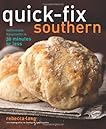 Quick-Fix Southern: Homemade Hospitality in 30 Minutes or Less
by Rebecca Lang
My rating: 2 of 5 stars
Quick Fix Southern / 9781449401108
At time of writing this review, I'm the only negative voice in a sea of 5-star reviews -- maybe I didn't receive the same book as the other reviewers, but this cookbook was something of a disappointment for me.
First of all, I have something of a rating rule for cookbooks: there has to be a picture for almost every recipe or it can't be a 5-star book for me. If there are no pictures for any of the final products, then the book is 3-star or lower, right off the bat. Is this a fair rule? It essentially means that if Jesus and Gandhi collaborate on a cookbook entitled "World Peace Through Heavenly Cuisine" or something, but they don't include pictures, it won't be getting more than a 3-star rating from me. But I'm okay with that, because for me personally, I need pictures in order to understand (a) whether or not I want to make the dish in the first place and (b) how I can tell when my finished dish is correct. That's just how I roll.
So right off the bat, I have a concern with this cookbook that some readers won't share: there are no pictures in here of any finished recipes. Oh, there are pictures in the book -- monochrome snapshots of the ingredients -- but none of the recipes. For instance, the "Eggs In A Basket" recipe which is eggs and toast has a picture of...eggs. In a basket. The BLTVA Sandwiches recipe has a picture of a single piece of bacon. And so on. If you're the sort of cook who eats with their eyes -- for instance, if you're looking at this book because of the luscious biscuits on the cover -- then this will bother you; if you're not, then that's fine, too. (Maybe the lack of pictures in my version stems from the fact that I was reviewing an ARC... but then the Amazon "Look Inside This Book" feature doesn't show any pictures either.)
The biggest problem with putting out a cookbook these days is trying to distinguish your book from everyone else's -- or, worse, from the plethora of free online recipes. A lot of cooks try to justify the price of the cookbook by including either gorgeous photography (to shine in contrast to the home-photography of most online recipe sites), a personal touch (little stories and vignettes to humanize the recipes), or scientific discussions to help the reader understand the cooking process more thoroughly. "Quick-Fix Southern" takes the second route of little stories and vignettes, but I wish it had taken the first and third options instead. There's not a lot of material here to help understand WHY the recipes work and how to modify them to suit your tastes.
For instance, the pot roast recipe on page 112 is fairly straightforward: brown the meat on both sides and throw it in a crock pot with wine and onions. However, there's no science here, only a recipe to follow from heart, and I find that disappointing. What if you don't want to use the wine or the onions? What will you lose besides those tastes -- will the removal of those elements affect the texture of the meat? If so, how will the meat be affected, and what can the cook substitute in order to retain the texture of the meal while still keeping flexibility on the table? In a day and age where everyone and their dog has food allergies, it's frustrating for me to read recipes that give no explanation, no alterations, and no real understanding of the science involved -- if you don't know what each element is doing, you can't intelligently experiment. Not that every cookbook has to be a science tome, but if all you're giving is a rote recipe, how are you going to distinguish yourself from every other cookbook out there?
The tagline of this book is "homemade hospitality in 30 minutes or less", but I do not really understand why that was slapped on the book because it isn't true. Most of the entree recipes take hours to cook and marinate -- very few of them seem to clock in at under the 30 minute mark for the entire prep from beginning to end. The multi-hour cooking time recipes are at least contained in crock pots, but even these require a couple of factors that someone looking for "30 minute meals" may not have to offer: (1) the slow cooked recipes often require ingredients to be added along the way at certain intervals, so you'd better be working from home on these days, and (2) the slow cooked recipes usually require extensive planning ahead (brown the meat, cut the onions, throw it all in the pot, etc.), so these aren't precisely "get home, get a meal put together" recipes.
A final word about the organization of this book: it seems unfinished. Some of the recipes have little headers like "Serves 8" or "Makes 6" or "Marinating Time: 4 Hours" or "Baking Time: 45 Minutes" or "Chilling Time: 1 Hour", but these headers aren't used on every recipe and there's never really an indication of "from start to finish, about how long can this reasonably be expect to take?" (There's also not any of the fancy "nutritional information" boxes that I'm coming to like in a lot of the newer books on the market.) I'm also rather astonished to realize -- looking back over my notes -- that this book doesn't seem to have a dedicated bread section. I'm puzzled as to which recipe corresponds to those gorgeous biscuits on the cover -- they don't seem to be Sweet Potato Biscuits on page 20 (sweet potato biscuits would have darker color than those, right?) but they're too well rounded and cut to be the Drop Biscuits on page 23. For these to be apparently the only biscuit recipes in a dedicated southern cookbook makes me a little sad somehow.
I like to provide recipe lists with my cookbook reviews since people usually ask in the comments, so here's what this book includes:
RISE AND SHINE
Three-Cheese Grits 13
Peach Yogurt Parfait 14
Soft Buttermilk Waffles 15
Baby Vidalia Frittata 16
Plantation Scrambled Eggs 17
Slow-Cooking Stone-Ground Grits 18
Eggs in a Basket 19
Sweet Potato Biscuits 20
Wild Mushroom Quiche 22
Drop Biscuits 23
Tupelo Orange Smoothie 24
Lemony Figs with Lavender 25
SIPPING ON THE SCREENED PORCH
Spiked Lemonade 29
Lime Mint Julep 30
Magnolia Mimosas 31
Classic Sweet Tea 33 (with Mint Variation)
Peach Daiquiris 34
Key Lime Martini 34
Watermelon Margaritas 35
Blackberry Bubbly 36
Strawberry Kiss 36
Herbed Bloody Mary 37
APPETIZERS AND SNACKS
Slow Cooker Boiled Peanuts 41
Jalapeno Deviled Eggs 42
Spring Vegetables with Lemon Herb Dip 43
Watermelon and Feta on a Stick 44
Benne Seed Shrimp 46
Pepper Jelly Tarts 47
Spiced Pecans 48
Baked Brie with Fig Preserves and Pecans 49
Blue Cheese and Bacon Popcorn 50
Smoked Trout Spread 51
PICNICS AND PACKABLES
Classic Pimento Cheese 55
White Pimento Cheese 56
Chipotle Pimento Cheese 57
Tomato and Black Bean Salsa 58
Quick Icebox Pickles 60
Peach Salsa 61
Marinated Roasted Peppers 62
Texas Caviar 63
Honeyed Tomatoes and Ricotta 64
Pickled Wild Shrimp 66
Pickled Okra and Ham Wheels 67
Appalachian Trail Mix 68
Chewy Granola Bars 69
SALADS, SOUPS, AND SANDWICHES
Sweet Onion Slaw 73
Bacon Vinaigrette with Salad Greens 74
Red Potato Salad 75
Baby Spinach Salad with Blueberry and Lime Vinaigrette 76
Dilled Cucumber Soup 78
Real Tomato Soup 79
Fast Brunswick Stew 80
Chilled Strawberry Peach Soup 81
Little Beet Salad 83
Herbed Tomato Sandwiches 84
Tarragon Chicken Tea Sandwiches 85
Egg Salad 86
BLTVA Sandwiches 87
TAILGATES AND GATHERINGS
Short-Cut Barbecue 91
Ribeyes with Bourbon Pecan Butter 92
Dressed-Up Oysters 93
Skirt Steak with Vidalia Onion Chimichurri 94
Mustard and Sage Pork Tenderloin 96
Stuffed and Baked Chicken 97
Blackened Catfish 98
Pecan-Crusted Racks of Lamb 99
Brown Butter and Pecan Trout 100
Oyster Dressing 101
Mama's Baked Beans 102
Grilled Vidalias 103
BUSY WEEKNIGHT SUPPERS
Soft Catfish Tacos 107
Green Beans and Red Potatoes 108
Oats and Bacon Meat Loaf 109
Spicy Mustard Greens 110
Slow Cooker Pot Roast 112
Quail Skillet 113
Southern Pesto with Pasta 114
Divine Chicken and Dumplings 115
Roasted Acorn Squash 116
Sausage, Vidalias, and Tomatoes 118
Fresh Corn and Tomatoes 119
COMFORTING CASSEROLES
Petite Chicken and Wild Rice Casseroles 123
Double Cheese Macaroni and Cheese 124
Chicken Spinach Burritos 125
Herbed Squash Casserole 126
Christmas Morning Souffle 128
Chicken Boudine 129
Mozzarella Corn Spoon Bread 130
Spinach and Vidalia Souffle 131
Country Ham and Swiss Casserole 132
Warm Curried Fruit 134
Shrimp and Grits Bake 135
GIRLS' NIGHT IN
Boiled Shrimp with Old Bay Sauce 139
Roasted Tomatoes and Parmesan Grits 140
Shrimp and Roasted Red Pepper Quesadillas 141
Fried Green Tomatoes 142
Mini Buffalo Burgers 144
Butter Bean and Bacon Hummus 145
Tomato Panzanella 146
Okra Fritters 147
Stuffed Corn Bread 148
Little Crab Cakes 149
Asparagus Bundles with Bacon 150
Tomato Biscuit Pie 151
SOUTHERN SWEETS
Benne Seed Sugar Cookies 155
Lazy Girl Berry Cobbler 156
Grilled Brown Sugar Peaches 158
Ambrosia and White Chocolate Trifle 159
Blueberry Peach Float 160
Easy Ice Cream 161 (with 3 Variations--Blueberry, Peach, Strawberry)
Double Chocolate Scoop Pie 162
Real Fast Pralines 163
Upside-Down Chess Pies 164
Mini Key Lime Tarts 165
NOTE: This review is based on a free Advance Review Copy of this book provided through NetGalley.
~ Ana Mardoll
View all my reviews

|
|
Review: 1 Mix, 100 Cakes |
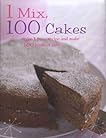 1 Mix, 100 Cakes
by Christine France
My rating: 2 of 5 stars
1 Mix, 100 Cakes / 9781407564333
I have mixed feelings about this book. On the one hand, I love the idea: there's supposed to be one basic cake mix here, with 100 variations on the theme. This is a great idea in theory - you can mix the basic cake elements even before you decide which variation to make - but it doesn't pan out in practice. First of all, there *isn't* one mix - there are variations on the "basic mix" depending on the extra ingredients; for instance, the moisture elements and sweet elements in the "basic mix" varies from recipe to recipe. Without the "1 Mix" aspect, this book just becomes "100 Cakes", but only in the loosest sense of the term. A lot of the "cakes" are cupcakes and bar desserts, which is fine for my own needs, but isn't quite Exactly What It Says On The Tin.
Another thing I like about this book is that *every* recipe here has a photo - that's a major deal for me. I really, really, really like to see photos before baking, and I think that aspect is very important. The implementation is flubbed, though, because a lot of the cakes are shown "post-icing" without any kind of "side-slice" view - this is particularly frustrating with cakes where the icing is just rolled-out fondant because I don't need to see what fondant looks like! And as much as I love the information presented in pictures, that doesn't mean that words become optional; there's no description of *any* of the cakes outside of the 'information' in the title - you have no way of knowing how sweet or sour or whatever any of the cakes are *before* you choose to make them.
I would definitely not recommend this book for beginners - the instructions are confusing and in some cases just plain wrong or strange. Instead of creaming the wet ingredients and adding the dry, the reader is told to combine all the dry ingredients and then dump the wet ones in all at once! This goes against everything I've read about baking cakes. Since the cakes don't have descriptions, sometimes the instructions are extra confusing - the "Whole Orange" cake *seems* to call for a whole orange (skin and all) added to the mix, but it's tricky to tell.
It's worth noting that the recipes I've tried with this book have all resulted in very dense and dry cakes and in icing that is very sweet but not very flavorful. I honestly thought this was my own fault, but it sounds like another reviewer had the same experience, so now I'm re-evaluating whether or not I want to continue trying to work with this book. I think, ultimately, it's not worth the struggle - there are plenty of good pictures-plus-text dessert books out there that make it clear what to expect in advance from a recipe and that have clearer instructions. Also, as much as I love this little hardcover with the puffy covers, the pages are starting to fall out after very gentle handling.
~ Ana Mardoll
View all my reviews
|
|
Review: Trapped |
 Trapped
by Michael Northrop
My rating: 2 of 5 stars
Trapped / 978-0-545-21012-6
I like "survival horror" style books and movies, and was really looking forward to "Trapped". Even the timing was great - I received the book right before the worst snowstorm in 15 years dumped right onto our house! So I was really looking forward to wrapping up with some fluffy blankets and vicariously experiencing the terror that comes with being cold, alone, and utterly trapped in a snowstorm. Unfortunately, I ended up disappointed. This slim, 230-page book that would normally take me only a few hours to read, actually took me days to finish because it was so consistently dull and frustrating that I couldn't read for more than a few short pages at a time.
Things started off badly when the narrator kept hyping up the incredible tale that he was going to tell us - a harrowing snowstorm that he barely survived! - but then kept veering off from the tantalizing tale to tell us a little more about his high school, or about the basketball team, or where he and his best friend used to ride their bikes together, or their interests and hobbies and obsessions, etc. In my experience, it's not a good idea to keep dangling an interesting story in front of your readers, only to keep yanking it back to introduce more stock high school stereotypes - especially when most of this exposition could have been revealed throughout the narrative instead of all at the beginning.
There's an overall problem, really, with this "retrospective" narrative voice; the story teller is supposed to be a teenage boy, but the voice frequently feels noticeably "off", like when he uses old idioms like "come on like gangbusters" and talks nostalgically about how it is when your hormones are taking control of you all the time. Indeed, far more attention is paid to "hormones" than the actual snowstorm: the narrator constantly refers to the girls stuck with them as "chicks" (who are really only fleshed out as the "hot love interest" and the "plain friend"), theorizes at length that hot chicks shouldn't be "allowed" to mingle in general public because of the havoc wreaked on hormonal boys, and frets frequently that 5 boys stuck in an extended snowstorm with 2 girls will lead to all kinds of trouble because the testosterone-filled boys will be compelled to fight each other for the attention of the girls, or something of that nature. It's all very melodramatic and not very interesting, at least it wasn't for me. Other narrative details are outright odd - the narrator goes into lavish detail about three different "prayer sessions" that the kids hold, and makes a big point of saying that "prayer in schools" would offend most people, which seems like a strange thing to mention under the circumstances, and it just doesn't flow naturally at all.
There's very little conflict or action in this book; most of the plot involves the kids sitting around waiting and being surprised by everything that happens. This seems odd - this is a northern school, and snowstorms are a way of life for the kids in the book, yet they seem to know next to nothing about cold weather! Roughly half of the book has the kids alternating between lamenting that no one knows they're trapped in the school and complaining that they can't get a cell phone signal in the storm. The kids are trapped in the school for *days*, and yet no one - not a single person - thinks to look for a land line phone in a nurse's or principal's office. I don't understand this - where I live, the phone wires are buried and the phone company has an extremely powerful generator to power the land lines, and I understood that even as a kid: when the power goes out in an emergency, get to a land line phone. These kids never even think of it; heck, they're shocked when the bathroom pipes finally freeze up - something that even happens in the southern states where I live. More often than not, it feels like the kids are deliberately stupid because then there wouldn't be as much story-time with them standing around complaining.
Overall, I just found this novel to be terribly disappointing. The characters seemed like stock stereotypes, and never really developed outside of their introductory info-dumps at the beginning. The bulk of the narrative seemed to contain complaining about things that most teenagers would understand; pipes freeze in winter, cell phones don't work in storms, your cell phone battery will run down if you keep playing graphics-intensive games on it during a power outage, and so on. All the macho posturing about being a hormone-ridden teenager didn't help the narrative, nor did it help define the narrator; it just seemed boring and distracting. The ending is *incredibly* abrupt and had I cared at all about the characters, I would have been furious, but as it was, I just felt relief that the book was finally over. I wouldn't recommend this book.
NOTE: This review is based on a free Advance Review Copy of this book provided through Amazon Vine.
~ Ana Mardoll
View all my reviews
|
|
Review: List Maker's Get-Healthy Guide |
 List Maker's Get-Healthy Guide
by Prevention Magazine Health Books
My rating: 2 of 5 stars
List Maker's Get-Healthy Guide / 978-1-605-29409-4
I'm a *list making fiend* - I love lists, love making them, love using them, and have a lifetime subscription to my favorite online list organizing service Remember The Milk. I also have a lot of health problems on a day-to-day basis, so I was excited to pick this up, thinking that there might be a lot of useful advice about medications, doctor visits, and daily upkeep information. Instead, I got a reminder of why I never maintain a subscription to Prevention magazine for very long - this book is mostly "diet" and "beauty" tips, which center more around how to spend more money rather than how to be healthy and happy.
The first chapter is devoted to food - "good" foods, "bad" foods, and how to trick yourself into maximizing the former and minimizing the latter. Putting aside HAES philosophy for the moment, I don't think these lists can be followed practically. There's a "superfoods" list that contains 10 foods that everyone should eat every day, and if you're still hungry after your daily mandatory servings of fresh figs, turnips, lychee, spinach, asian pears, bok choy, papaya, soy, wild salmon, and walnuts, then you've a faster metabolism than I. The "must haves" lists for your pantry and freezer (which, surprisingly, don't contain the superfoods - are they not "must haves"?) don't provide any real information on how to actually *serve* the foods, and the lists are fluffy in the extreme: of the 5 "must haves" in your freezer, 1 of the items on the list is "Fresh Herbs!". "Herbs" are not universally healthy, but this book seems to claim that they are - there's no accompanying list in this "List Maker's Guide" for which herbs provide which health benefits!
I was also startled by the simplistic "3 Food Groups Worth Buying Organic" list. You see, this is a hot topic in the foodie community, since buying organic is expensive and not everyone can afford to go 100% organic. As a result, a LOT of research has been done on which food items have the most "organic payoff" and which ones can be (relatively) safely bought as non-organic. So what are the "3 Food Groups" where you MUST spring for organic, according to this book? "Fruits and Vegetables", "Meat and Poultry", and "Dairy". What does that "list" leave to be safely bought in non-organic form? Twinkies?
The "exercise lists" are almost all about how to spend money: "how to buy a sports bra", "how to buy tennis shoes", "how to pick a gym", "how to hire a personal trainer". The "mental health lists" feature rather insipid platitudes and strange advice: the "how to deal with toxic people list" advises that posture is very important when dealing with toxic people - from the text, it seems to be saying that toxic people are like wild animals, and if you don't sit up straight, they'll pounce on you. (In which case, I recommend taping extra eyes to your body so that the toxic people think you're a large predator and they'll back away slowly.) Like the "exercise lists", the "beauty lists" are almost 100% buying stuff: "If you don't have the time or budget for regular facials," do at least buy "pore cleaning strips sold in drugstores." I don't know why organic soap and tap water is deemed insufficient - if chemicals aren't touching your skin, then it's not beauty?
I'm probably being too hard on this book - it's pretty clear once you get into it that this is really just a "companion text" for regular readers of Prevention magazine, despite the title call to list making and health. It's probably meant to combine all the material of a year's run of the magazine with none of the overt advertisements, and if that's all you want, this book probably delivers. I picked it up in mistake, thinking it would be more about "health" and "list making" than about random combinations of platitudes (wash your hands after using the toilet!) and marketing advice regarding the proper ways to select day spas and personal gym trainers. However, I'm frustrated that this is spun as a "list maker's guide" when the lists are just random groupings of advice, not truly distinct points to be crossed off towards the completion of a task, and I'm annoyed that a "get healthy" guide is really 90% about consumer spending on daily frivolities, with almost 0 discussion on how to deal with doctors, medications, or "real" health issues besides your daily moisturizer choice.
NOTE: This review is based on a free Advance Review Copy of this book provided through NetGalley.
~ Ana Mardoll
View all my reviews
|
|
Review: The Bride Collector |
 The Bride Collector
by Ted Dekker
My rating: 2 of 5 stars
The Bride Collector / 978-1-599-95196-6
I picked this up at the library, and it's my first Ted Dekker novel. I understand he's quite famous, and I don't want to be overly negative, but I just really didn't enjoy this novel, and it didn't hold my interest. I really like crime dramas on television, and this novel definitely doesn't seem to fit that demographic.
There seems to be very little emphasis on either the physical hunt or the psychological chase. CODIS and AFIS are mentioned about once each, very perfunctorily, and after that it seems like every crime scene is described (and dismissed) with a quick "Brad knew the killer was too smart to leave any X behind" where X is biologicals, fingerprints, useful fibers, etc. This gets sort of frustrating after a time, as if Brad has a direct line to the author; even on CSI when the clues don't pan out, we still get to read about the search. The psychological profiling is almost as flimsy - the detectives operate by a stream-of-consciousness rapid-fire profiling, where they just say the first thing that comes to their mind, because rapid guesses are "more real" or something. It's all very mystical.
For the first 100+ pages, the only detective work we really see is that the FBI detectives consult a psychic! This is kind of hand-waved by her being some kind of mentally gifted savant who "sees" ghosts as a way of processing all the extra information she picks up that other people miss, but at the end of the day that "extra information" isn't being processed by anyone except the psychic, so that's what she fundamentally is, within the boundaries of the story. Since this thread seemed so tenuous, it didn't hold my interest at all, I'm afraid.
A lot of this is written like a romance novel to me. The lead investigator is a "blond George Clooney" (and please can authors stop writing like this? I can count on one hand the number of Hollywood dead-ringers I've met in my life. I'd really rather go back to "tall, dark, and handsome" than these Tom Cruise, George Clooney, and Matt Damon lookalikes in all my books), and pages and pages and pages are spent describing the women in the novel studying him, thinking about him, desiring him, and feeling like they aren't worth his time, etc. Also, one of the female main characters is named "Paradise", which makes me feel like I'm being beat about the head with Meaningful Names.
Little details are missing that bug me. When the serial killer breaks into a woman's house, he carefully cuts through the window glass to avoid triggering the alarm contacts that she has on all her doors and windows. At the end of the chapter, though, he strolls out the back door. What happened to the alarm system? He can't have turned it off from the inside, because modern alarm systems require a code - there's not just an "off" button. Maybe he cut the wires or something, but it's a strange thing to omit.
Anyway, I'm sorry to be so negative, but I just couldn't get into this novel the way I wanted to. The lack of "investigative meat" bugged me. I'm sure this would be a great novel for anyone looking for a romance / thriller-lite novel, as long as you don't expect forensics and don't mind the psychic consultations.
~ Ana Mardoll
View all my reviews
|
|
Review: The Forest of Hands and Teeth |
 The Forest of Hands and Teeth
by Carrie Ryan
My rating: 2 of 5 stars
The Forest of Hands and Teeth / 978-0-375-89197-7
I really like zombie literature, and I was really excited to pick up this novel. I was intrigued when one reviewer compared the setting to a combination of "The Village" and "Resident Evil", so I was prepared to like this book when I settled in with the audio book and the e-book, ready to follow along.
Two hundred and thirty-three pages later, I'm at a loss. I guess I'm not the right audience for this book, despite how strongly I was hooked by the premise; I'm not sure who IS the right audience for this book, but it puts me in mind of all the "paranormal romance" books that the "The Twilight Saga" has spawned.
Against all odds, this book is a terribly slow starter. Unlike other recent "teen" novels, like "The Hunger Games", very little happens in the first 100 pages outside of world building and character establishment. Both show initial promise but ultimately bear rough edges - the zombie premise contains major gaps (like why a village with safety-platforms would fail to keep said platforms stocked with food and weapons and other necessities - this ultimately becomes a major plot point, in fact), and the characterization feels shallow to the point where most of the characters seem like unrealistic stereotypes of teenage angst.
When the general zombie mayhem that was promised on the back of the box does finally occur, it's almost on sufferance - *any* sense of adventure and danger is immediately quaffed to make room for more love-quadrangle discussions. The plot of this book is basically Shakespeare's "A Midsummer Night's Dream", but instead of fairies propelling the action forward, a zombie very occasionally pops up to say 'boo'. And this is, fundamentally, very disappointing to me - there's lots of novels out there that center around the complications of teen romance, even under a variety of unusual, difficult, and/or post-apocalyptic conditions, so adding this one as one more tween romance on the pile feels disappointing, and a criminal waste of a good premise.
Wishing no disrespect to the author, a lot of the writing feels very amateur - the main character's running narration repeats itself frequently, and the same relatively minor details crop up repeatedly across the chapters. When reading along with the audio book, I kept finding myself saying, "You just said that, two pages ago!", and it makes the already slow, dreamy pace feel like a crawl. When the zombies *do* occasionally force themselves into the action, it's almost a relief, because then the main characters can stop arguing incessantly over their romance problems.
A final word about the audio book - it feels like the narrator herself found this book deathly dull, as the audio just seems to plod along without much in the way of animation or inflections. The narrator does a nice accent for the character of Sister Tabitha, but everyone else has the same monotonous tone, with no emotional inflections, and even the breathing and pausing seemed a little 'off'.
If you like paranormal or post-apocalyptic teen romances, then I think you may really enjoy this book - it's an interesting premise, to be sure. But if you came for the zombie mayhem or for the post-apocalyptic world building, I think you'll be disappointed and may do better to look elsewhere.
~ Ana Mardoll
View all my reviews
|
|
Review: How to Live Safely in a Science Fictional Universe |
 How to Live Safely in a Science Fictional Universe
by Charles Yu
My rating: 2 of 5 stars
How to Live Safely in a Science Fictional Universe / 978-0-307-37920-7
It's sort of fitting that "How to Live" contains multiple mentions of the main character's masturbatory efforts, given the book's almost complete and total unwillingness to stop navel-gazing and actually dredge up a plot out of the pseudo-philosophical ramblings that make up the majority of this book - because the entirety of the novel feels like one big authorial indulgence. Or, as another reviewer aptly stated, there really ought to be a law that "stories about characters who live in phone booth sized time machines would have to extract their characters from the phone booth by means of plot...and within the first 50 pages." I couldn't agree more.
Sadly, I was really looking forward to this novel - I'm a big fan of humorous science fiction a la "The Hitchhiker's Guide to the Galaxy" - but this novel is nothing but a painful slog to the end. The pseudo-philosophical ramblings that go on for pages and pages, attempting to sound smart with sprinkling of quantum physics terms, did nothing to endear itself to me - nothing about this book feels "deep", but rather just self-important and preachy. Be prepared to invest several chapters of reading before anything genuinely *happens* - the first six or more chapters are a blur of whining about how crappy childhood can be, and how depressing it is that his mom has chosen to spend her life locked Vanilla Sky-style in a perpetual loop where it is always dinnertime (but never Christmas? Oh never mind.)
If you think I'm exaggerating, consider this: the *entirety* of chapter 5 (which is, granted, only two pages long) is about how, growing up, all boys always want to play as Han Solo, and whoever had "dibs" was the happiest kid, and one time someone accidentally picked Buck Rogers, and it was like the kid who had second dibs had won the lottery that day. Aside from the fact that I have no idea what age the target audience is here - Buck Rogers was from the 1920's; most readers, on the other hand, are not - this sort of stuff isn't deep and meaningful interpretations of modern masculinity as it evolves through the medium of our cultural icons... it's just self-aggrandizing. None of this really gives us any insight into the main character, because it's not just him who wanted to be Han Solo (which would at least give us some insight into his own personality) - it's ALL boys. Everywhere. Ever. So not only is our boring main character flat and devoid of interesting personality, he's an Everyman for the entire universe within this book. Fantastic.
The only possible audience for this book that I can think of are youngish men who really like philosophical diatribes laced with scientific-sounding terms, and who don't really require much of a plot to propel said diatribes. Unfortunately, with references to "Buck Rogers" and the like littering the pages, it will be a very narrow selection indeed of youngish men who enjoy this novel. Anyway, since I don't fit into any of that demographic, I found this novel to be utterly unpleasant to read, and to be less interesting than watching paint dry.
NOTE: This review is based on a free Advance Review Copy of this book provided through Amazon Vine.
~ Ana Mardoll
View all my reviews
|
|
Review: Shadow Princess |
 Shadow Princess
by Indu Sundaresan
My rating: 2 of 5 stars
Shadow Princess / 978-1-4165-4879-9
My first introduction to the story of the intriguing and mysterious princess Jahanara, was with the engaging and interesting "Jahanara: Princess of Princesses", a fictional Royal Diary installation for young children. I was, in light of this introduction, greatly looking forward to reading "Shadow Princess", but rarely have I seen a novel more in need of an editor's firm hand!
With a meandering and confused narrative, "Shadow Princess" flits rapidly from an omniscient narrator to diving into a character's intimate point of view to leaping forward into another character's point of view, all within the space of a few sentences - indeed, sometimes the point-of-view leaps occur in the *same* sentence. The novels jumps backwards and forwards through time, and the author seems to strongly distrust the reader's ability to pick up cultural and historical details the usual way, i.e. through the narrative - instead, she grinds the story to a halt every couple of pages to skip off to a history lesson. And, if that weren't bad enough, the history lessons are often repeated a few pages later! The whole overall tone is disjointed, confusing, and poorly constructed - which is a shame, because there's a good story underneath that a better editor could have brought out.
Just for example, in the first 50 pages of "Shadow Princess", the narrative goes thus: point of view of Mumtaz Mahal, point of view of Jahanara, point of view of Shah Jahan, switch to narrative omniscience, back to Jahanara, then to Aurangzeb, off to Shah Jahan's first wife, across the country to Jai Singh (so that the author can tell us, flat-out, what's going to happen in 30 pages - if that doesn't dull the suspense, I don't know what will), back into omniscient narrative, then to Commander in Chief Mahabat Khan, back to Aurangzeb again, then to Jahanara, forward in time one day with Nadira, then back fifty four years (and one day) to Ghias Beg for a quick history lesson on Mehrunnisa, then forward again (to the day before Nadira's point of view earlier) to Shah Jahan, then forward a day for Shah Jahan to reflect on the history of Mehrunnisa (again!!), then forward in time to Dara, who is just now catching up in time with Nadira.
For those keeping count at home, that's 17 point of view changes in 50 pages, for an average of one switch every three pages. And that's being liberal on my part - I've left out all the times that the narrative zooms into one of the younger children or one of the palace servants for a sentence or two. Nearly all of the point of view changes are superfluous and unnecessary - given that we're only with Jai Singh for a couple of pages, and given that his part of the narrative could easily unfold as the tomb land is purchased and built, we don't really *need* to grind the narrative to a halt to go check on him every couple of chapters. The constant flash-backs, flash-forwards, and flash-sideways are cumbersome and difficult to track - the scene with Nadira jumping forward in time flat out is not necessary and could have been handled when Dara got the summons, but instead the author jumps into "tomorrow" with Nadira, before then jumping back to "yesterday" to tie up some loose ends with the Shah, before continuing on to "tomorrow" again - the whole thing is convoluted and confusing.
I really did not think it would be possible to turn me off of a novel of Jahanara, but I simply could not wait to put "Shadow Princess" down. The writing is heavy and verbose and put me in mind of an obsessive compulsive who would rather sacrifice flow and rhythm rather than sacrifice one sentence of historical research that was no doubt accumulated for this lengthy novel. And despite the near constant telling of what everyone in the novel is thinking and feeling, I felt the characters to be poorly characterized, two-dimensional, and largely shallow and without depth - probably because the characterization is spread too thin and among too many characters.
NOTE: This review is based on a free Advance Review Copy of this book provided through Amazon Vine.
~ Ana Mardoll
View all my reviews
|
|
Review: Fairest |
 Fairest
by Gail Carson Levine
My rating: 2 of 5 stars
Fairest / 978-1-934180-08-2
There is an entry on TV Tropes called "Idiot Plot", which is defined as a plot that is only possible because all the characters are complete idiots. With that completely unrelated tidbit in mind, let's go over the plot of "Fairest".
"Fairest" is set in a provincial little kingdom, whose humble and quiet subjects are abjectly and lovingly devoted to their wise and gentle king. When the exceedingly wise and clever king decides to marry a sexy young foreigner who is (a) literally less than a third of his age, (b) completely ignorant of the country's ways and customs, (c) not even remotely trained in the rudimentary concepts of leadership, and (d) utterly spoiled rotten, the wise king and his wise advisers and his humble people see absolutely nothing potentially wrong with this stellar plan.
When the totally unforeseeable occurs, and the extremely elderly king becomes incapacitated in an accident, it becomes apparent that this sweet provincial kingdom who has weathered its fair share of civil wars in the past, has literally never heard of a succession plan. The young queen - who has been married less than 24 hours at this point - immediately assumes the throne, forcibly disbands the parliamentary council, and starts to rule with an iron fist - a course of action that no one opposes because no one in this kingdom has ever had a teenage daughter before.
The protagonist against all this political intrigue is young Maid Aza. Aza, poor thing, is ugly - she's literally so ugly that guests at her adopted parents' inn will sit and stare at her for hours, fascinated by her intense ugliness. Seriously, she makes Quasimodo look smoking hot - and she will tell you again, and again, and again how truly ugly she is. (This is particularly helpful in the audio book version - if she just told you 99 times how ugly she was, it might not fully sink in; it's that extra 100th time that really makes or breaks the story.) How is she ugly? Well, she's kind of tall, and kind of wide, and her skin is ghost-white, and her lips are blood-red. She's HIDEOUS!!!
Ultimately, "Fairest" is a difficult book to enjoy, because the protagonist is distinctly unlikable. Apart from the constant, repetitive, excessive, repetitive, annoying - did I mention repetitive? - reminders of how "ugly" she is, she comes across as almost as selfish and spoiled as the Designated Villain. When people in the kingdom are starving, and Aza is being blamed for their suffering, she simply cannot take her mind off of an upcoming shopping spree; when the distraught palace staff start "pranking" Aza to get back at the queen, instead of explaining that she's on their side, Aza instead totally gets off on threatening the staff and making them grovel before her. It's hard to root for the Designated Hero, when she's just as unlikable and selfish as the villain - and the villain has been magicked up to the gills enough that it's almost easy to believe that her behavior may not be completely typical at this point.
We listened to this audiobook on a long trip; the box proudly proclaims that "Not one single sentence has been omitted!" but this is something I think they should have rethought. Since the kingdom in "Fairest" is a "Planet of Hats" where everyone sings constantly, someone hit upon the world-beating idea of making a musical out of this story. The voices are, for the most part, good - but the songs are boring and tedious - the repeated cleaning songs, bathtime gurgles, and the like reminded me of the poetry of Grunthos the Flatulent and his twelve book epic 'My Favorite Bathtime Gurgles' - and we all know how THAT ended.
Bottom line, I suppose some young readers may like this book, but I found the protagonist so appalling, and the supporting characters so utterly stupid, that I found no enjoyment here.
~ Ana Mardoll
View all my reviews
|
|
Review: Daughters Of Zion |
 Daughters Of Zion
by Kim Taylor
My rating: 2 of 5 stars
Daughters of Zion / 978-0-615-25701-3
This is the fourth biographical polygamy novel I've read this year - sixth, if I count "When Men Become Gods" and "Under the Banner of Heaven" - and I've come to realize that these polygamy novels come in two sorts of flavors. The first flavor, the "Escape" flavor, is seen in books like "Escape" and "Stolen Innocence", and tells the story of abused women fleeing from abusive polygamous marriages, often fearing for their safety, their lives, and their children. The second flavor, which I would tentatively call "Day in the Life", is seen in books like "Shattered Dreams" and now this "Daughters of Zion".
Unlike the "Escape" novels, the "Day in the Life" novels don't feature women fleeing from polygamy, but rather showcase women who may or may not be less happy than their monogamous counterparts going through their daily lives over the course of the narrator's natural life, or at least up until they signed a book deal. The end result is, frustratingly, a biography without direction or purpose, and a snapshot of hundreds of lives mired in depression without any sort of catharsis for the reader.
If these problems were evident in my "Shattered Dreams" review, they are legion in "Daughters of Zion". Here the narrator isn't even a polygamist herself (although that factoid is probably a spoiler, since the novel keeps up a cynical "will-she-won't-she" tone for most of the entire novel), so her story focuses instead on life as a teenager within a polygamous colony. As one reviewer noted, the format is like a particularly slow and dreamy diary, but not in a good way - the narrator dwells as least as much on the ecstasies of warm Mexican-bottled coke as she does on the details of the polygamous lifestyles around her. Since she only experiences polygamy second-hand through her sisters, she is never really able to convey the difficulties of polygamy as a system outside of the fact that a lot of the men exemplify the Platonic ideal of "dead-beat dad".
If anything, the 'best' thing I can say about "Daughters of Zion" is that it is the first polygamy novel to make me lose my faith in humanity. Not because of abusive men (who, surprisingly, are in short supply here, if you ignore the abusiveness of the complete neglect most of the men in this novel dish out), but because of the author's parents, who are supposed to be the 'nice', non-polygamous family model for the author. If I may be permitted to engage in some self-righteous and unhelpful venting for a moment, it's particularly frustrating to see the parents of this family continually pick up and move to worse and more remote locations in service of a cult that follows a religious ideal that they *don't even agree with*, almost as if they are driven by some sort of fear of not being completely impoverished. About the second half, when their daughters start marrying the cult leaders, the parents put up only the most token protests, and when their daughters start "disciplining" the grandchildren by *literally* suffocating babies to stop them from crying, the grandparents "interfere" by meekly and feebly verbally protesting - once! - that that particular behavior isn't appropriate. Do they call Child Protective Services or the police? Of course not. Oh, wait, they do - years and years later after their sainted daughter finally dies and they can then go tooth and nail after her husband. Of course, at this point, the children have been abused for years, but I suppose it's better this way - no record for their abusive mother to have to live with. Predictably, the author spends very little time on this aspect of her life, except as an afterthought - she's too busy talking about her boyfriends and romps on the beach.
Indeed, it is sort of telling that these stories of abuse are always a sort of after-thought to the author - we hear about every man she ever dated, whether or not it matters outside of that chapter, but the fact that her nieces and nephews are being physically and sexually abused *every day* is a little factoid tagged on to the last chapter - and then only because the author seems to be proud of the fact that she took the children in. You don't get a cookie for decent human behavior, and it seems startling that the author expects one. Really, this seems more like a "gossip book" devoted to detailing the fact that the author dated a cult leader as opposed to actually talking about the *actual* victims of this polygamist cult, but that's just my impression overall. Add to that the fact that the author never, ever stops talking about how "pretty" she is (She thinks she isn't, everyone else says she is. There, I just saved you from reading about a third of this book.), and the overall effect is just terribly...shallow.
Breathless punch-ups aside, "Daughters of Zion" actually isn't that interesting - maybe if you're particularly interested in learning about the daily life of the Ervil LeBaron sect of the FLDS, in which case I will admit you will be better off with "Daughters of Zion" than with its sister novel "Shattered Dreams" - which talks even less about the abuse of children, if that's possible, but does actual provide the point of view of an actual, you know, *polygamist*. If you're not just enthralled with the Ervil cult, there are much more informative, better paced polygamy novels available, of which I most recommend "Escape" or "Stolen Innocence".
~ Ana Mardoll
View all my reviews