|
Review: Depraved |
by Harold Schechter
My rating: 5 of 5 stars
Depraved: The Shocking True Story of America's First Serial Killer / B0036QVPJ0
How is it that I live in Chicago and like learning about historical serial killers, but had never heard of H.H. Holmes until he was mentioned in a very terrible movie we watched while sick? Inconceivable, but Schechter is here to rectify my ignorance with "Depraved".
I say this every time but it bears repeating: I am a big fan of Harold Schechter's historical true crime books. While the questionable covers and book subtitles seem sometimes a little over-the-top, the actual contents of the books are top-notch in my opinion. Schechter writes in a very engaging style that is accessible to the audience, and handles the facts of the case in a chronological order as an easy-to-follow narrative. He is careful to cite his sources as he goes and is very clear when we encounter gaps in the record where we don't know what happened. Any speculation on his part is marked plainly and we are walked through the logical steps. I appreciate that in a crime author, as too many authors are willing to blur fact and fiction.
This book covers the life and death of H.H. Holmes, the first official serial killer of America. He was contemporary to Jack the Ripper (but not the same person) and you may have heard of him because he built a "castle" in Chicago that had all kinds of trapdoors and gas vents and acid pits until the city had to tear the thing down on account of it being (a) a notorious murder-pit and (b) so badly designed it was about to fall down anyway. They turned it into a post office, I think, which is kind of a delight to me: from about the worst possible building you can imagine to one of the most useful and good.
This book is fascinating for all the usual reasons a Schechter book is good: lots of historical detail and background and I learned a lot about the Chicago World's Fair of 1893, which I was not expecting to learn about. Very interesting stuff! But Holmes is also interesting from a serial killer perspective because he doesn't really fit the usual mold. A lot of his victims were close to him before their deaths, mostly mistresses and various business associates. His motives tended to be selfish ones that centered around money, either keeping it (from the mistresses) or making it (at least one business associate was murdered as part of a life insurance scam). He is a very different sort of serial killer from, say, Earle Nelson and the usual image of a stranger who picks out someone to die merely for personal gratification.
All the usual trigger warnings apply here: Holmes was a serial killer who targeted people who were close to him, especially women, and did not hesitate to kill children if he thought they would be a witness against him or a loose end. He additionally liked to make money off his victims by selling their skeletons to medical colleges, which was horrifying to read about. (If I understand correctly, all the skeletons were eventually recovered and given a proper burial when he was caught, which was a relief.) There's also discussion of alcoholism here, since Holmes' business associate struggled with alcohol abuse.
If you're interested in historical true crime and/or serial killers, you definitely want to read this book. There's a lot out there about Holmes but since he was a grandiose liar who liked to exaggerate his own misdeeds, the truthfulness is hard to gauge. Schechter does the hard work of sifting through the claims and presenting what is definitely true, what is completely false, and all the in-between claims and how likely they are.
~ Ana Mardoll
|
Review: Fatal |
Fatal: The Poisonous Life of a Female Serial Killer
by Harold Schechter
My rating: 5 of 5 stars
Fatal: The Poisonous Life of a Female Serial Killer / B009NHBJJ2
I am a very big fan of Harold Schechter's historical true crime books. While the questionable covers and book subtitles seem sometimes a little over-the-top, the actual contents of the books are top-notch in my opinion. Schechter writes in a very engaging style that is accessible to the audience, and handles the facts of the case in a chronological order as an easy-to-follow narrative. He is careful to cite his sources as he goes and is very clear when we encounter gaps in the record where we don't know what happened. Any speculation on his part is marked plainly and we are walked through the logical steps. I appreciate that in a crime author, as too many authors are willing to blur fact and fiction.
This book covers the life and death of serial killer Jane Toppan, an "angel of death" serial killer who targeted her patients as a nurse, as well as occasional friends and family members. On the topic of female serial killers of the time period who used poison as their weapon of choice (who knew that was such a large category? Not me!) the book also devotes some time to the chronicles of Lydia Sherman and Sarah Jane Robinson, in order to set-up commonalities and compare and contrast their methods and motives. (And we get to read the newspapers' breathless comparisons to Lucretia Borgia, which was of course terribly unfair to her since she probably never poisoned anybody! #historical pet peeves, I guess.)
The usual trigger warnings apply for this book, being about serial killers after all, including sexual assault of victims and child death. There's also the added aspect here of patient-nurse abuse and targeting sick and elderly victims. I really appreciate Schechter as an author because he treats these delicate topics with care and respect, and affords the victims dignity; he isn't crass or irreverent or flippant like some crime authors are.
One of the things I enjoy about Schechter's books is the historical context. Toppan operated in a time when arsenic was available over-the-counter at general stores as rat poison, and when autopsies after death were the exception rather than the rule. A shocking number of her victims were chalked up to various illnesses--even ones that hadn't previously been diagnosed in the patients before--and it's a wonder whether or not she would have been caught if she hadn't gotten sloppy and started going after young healthy people in the prime of their lives. The details on how bodies were examined for poison in the early 1900s were especially interesting to me; her victims were autopsied *after* the bodies had been embalmed, which complicated the situation since the embalming process used arsenic.
If you're interested in historical true crime, or if you'd like to read more about female serial killers (which are of course considered a rarity... but this book convincingly argues that maybe they shouldn't be) then this is an excellent read that I highly recommend. Oh! There's also a really interesting dive into the assassination of President McKinley and how utterly terribly the medical personnel handled the situation, none of which I'd ever heard of before, so that was VERY interesting to learn from this rather unexpected source.
~ Ana Mardoll
|
Review: Bestial |
Bestial: The Savage Trail of a True American Monster
by Harold Schechter
My rating: 5 of 5 stars
Bestial: The Savage Trail of a True American Monster / B00383YJFI
I am a very big fan of Harold Schechter's historical true crime books. While the questionable covers and book subtitles seem sometimes a little over-the-top, the actual contents of the books are top-notch in my opinion. Schechter writes in a very engaging style that is accessible to the audience, and handles the facts of the case in a chronological order as an easy-to-follow narrative. He is careful to cite his sources as he goes and is very clear when we encounter gaps in the record where we don't know what happened. Any speculation on his part is marked plainly and we are walked through the logical steps. I appreciate that in a crime author, as too many authors are willing to blur fact and fiction.
This book covers the life and death of serial killer Earle Leonard Nelson (sometimes known as Ferral instead of Nelson) and styled in the press as "The Gorilla Man" and "The Dark Strangler". Nelson is believed to have murdered at least 22 people and to have perhaps attacked twice that number, and holds the dubious honor of "third most prolific serial killer in American history." Most modern readers have never heard of him, and I certainly hadn't, so this was a very interesting and engaging read. (Wikipedia tells me he was a source of inspiration for Alfred Hitchcock's 1943 film "Shadow of a Doubt". Who knew? Not me.)
I never quite know how to trigger warn on books that are about serial killers, because obviously the material in here is going to be pretty grim, but I should note that Nelson's crimes included sexual assault and he also killed a few children who crossed his path, so be aware of that if you have associated triggers. I will say that one of the reasons I like Schechter so much as an author is because he handles delicate topics with care and isn't irreverent or flippant or jokey about the victims. He gives them grace and dignity, which I appreciate.
Another aspect I like about this book is seeing the historical context of detective work. I hadn't realized that fingerprinting crime scenes was something already doable in the 1920s; for some reason, I had thought that came later in the timeline. It's interesting to see how serial killing of Nelson's sort was only possible once cars became widespread; he had to stay mobile and move from town to town in order to keep from being caught. The witness statements are surprising in their detail (people used to pay more attention to clothes back in the day, or police were better trained to elicit detail from memory??) and the police are... well, some of them are good, and some of them kept insisting that women were committing suicide and stuffing their own dead bodies into trunks. So, you know, a mixed bag of competency. I did find it interesting that Nelson might not have been caught if he hadn't fled to Canada: he didn't know the words and mannerisms to keep from being identified as an American, so he wasn't able to blend in the way he'd done in America.
If you like historical true crime at all, I really recommend this book as a fascinating deep-dive into a strange man who really did seem to be some sort of real life Dr. Jekyll and Mr. Hyde.
~ Ana Mardoll
|
Review: Unavowed (Steam) |
Unavowed is what every modern adventure game should be from here on out, just in terms of game mechanics. (My opinion, of course! Ymmv!) You don't have to cycle through cursor options like Look/Talk/Walk/Handle; you point at something and the cursor changes automatically based on how you would normally interact with the item. It's so easy and convenient and I love it. Pick-up items are few and far between (and almost always stand out well from the environment) and they disappear from your inventory between chapters, so you don't have to do the adventure game dance of rubbing the screwdriver from Chapter 1 on every item in Chapter 9 hoping that the plot will unlock. In fact, most of the puzzles are solved by talking to people with new information you've uncovered since the last time you talked to them. I love it.
Story-wise, the game is very dark. A year ago, your character was possessed by a demon and went on a very disturbing killing spree... as well as doing a few other horrible things that don't quite make sense but which caused harm to innocents in the city. A group of community-minded magical creatures who call themselves the Unavowed have tracked you down, exorcised the evil spirit, and now you've joined them as they try to undo all the harm your demon did. You're able to help them with your wits and your fleeting memories (or really more like unwanted visions) of what the demon did whilst in your body.
If you don't mind the dark themes (and I watch CSI and Law & Order for fun, so I mean) then there's a really deep and emotional game under the hood about identity and redemption and morality and choices. Each chapter culminates in a complicated moral decision about a magical creature run amok in New York, and your companions are thoughtful and gentle in their advice to you. For example: A muse has lost her supernatural powers and absolutely does *not* want them back, but your demon imbued those powers into a guy who seems genuinely nice and likable BUT he's using his new muse powers recklessly and getting people killed. Do you (a) insist that the original muse take her powers back, even though it will make her miserable, (b) extend trust to the old man that he'll try to do better going forward, or (c) make it so that *nobody* holds the power of the muse, which could have rippling repercussions on artists in the future? Each situation is thoughtfully engineered so that there's no obvious "right" answer, and your companions wrestle with the ethics of the situation without "blaming" you if you choose differently--everyone recognizes that this stuff is complicated!
Representation-wise, too, I really love this game. One of the characters is a Brown woman of color whose magic comes from her Jinn father (and her fighting prowess was taught from her pirate mother). The white man in your group is a long-lived mage who misses his family who for their own protection thinks he is dead; he's the definition of Team Dad and I love him. Your ghost-whisperer is a beautiful Black man paired with a ten-year-old spirit guide named KayKay who is a DELIGHT; he wrestles with problems with addiction that is exacerbated by the strain of having to help people through their death trauma day after painful day. A cop joins your group and, yeah, she sees the cops in a positive light after being raised in a "cop family", but the game itself has a LOT of critical things to say about the police and their tactics. There's a lot of beautiful diversity here and I love it so much. You find yourself talking to the characters because you *want* to know them better.
All in all, I am just very thrilled with this gentle and loving game which takes the darkest parts of the crime genre and asks, sincerely and without judgment, how to make the world a better place.
|
Review: The Seven Towers |
The Seven Towers
by Patricia C. Wrede
My rating: 5 of 5 stars
The Seven Towers
Patricia Wrede has been one of my favorite authors for years. I recently re-read Seven Towers in a fit of nostalgia, and reaffirmed just how much I love this story and its characters. Amberglas, the absent-minded sorceress. Vandaris, the mercenary aunt who refuses to put up with nonsense. I adore them both so much, and every other one of this ensemble cast.
This is an epic multi-kingdom spanning story of war and politics, and I love how it manages to be beautifully complicated while still being accessible to the reader. Though I should note that I was reading this together with my spouse and he had some trouble keeping the names of the foreign countries straight, so I may have been aided with the help of my nostalgia and childhood memories.
I'm so pleased this is finally available on the kindle. I noticed a couple of very minor errors, probably as a result of the conversion to ebook, and otherwise the book was perfect as of my reading in 2022. (I can't speak for content prior to this date, obviously.)
~ Ana Mardoll
|
Review: Eichmann In My Hands |
Eichmann in my Hands
by Peter Z. Malkin
My rating: 5 of 5 stars
Eichmann in My Hands
I remember reading this in college and being entranced by this factual first-person narrative. I've just finished reading the book again on my kindle and am once again blown away by just how much information is in this book, and how accessibly it's all arranged and written.
When I was younger and reading this book for the first time, I didn't even know who Adolf Eichmann was, but Peter Malkin anticipates this issue and carefully lays out who the man was, what he did, the vast extent of his war crimes, and why his capture was so important to Jewish people and Holocaust survivors. This book is... I won't say the narrative isn't heavy in parts, because it is, but it's got a hopefulness to it that keeps it from being inapproachably sad. Malkin has a bright hope for humanity in his heart, despite everything he's been through (and there are times when his leaders do not come off well at all), and I greatly respect him for his outlook on life.
I highly recommend this book and think it is valuable for understanding the Holocaust and its impact.
~ Ana Mardoll
|
Review: The Belles |
The Belles
by Dhonielle Clayton
My rating: 5 of 5 stars
The Belles / B071XNWRHC
I'd heard in advance this book was amazing, and even pre-ordered the Kindle version, so I was excited beyond words when the publisher sent me an ARC to read in advance. I meant to read it a little at a time (I'm trying to break my marathon-reading habits) but ended up devouring the entire book in a day. SO GOOD.
The people of this world are afflicted with a mysterious curse which drains them of color. But a few girls are born with color and a mysterious magical gift: they can provide beauty (any color! golden hair? sure! red-rose lips? on it! honey-brown eyes? here you go!), moderate moods and temperaments, and grant musical and artistic skill. These girls are called Belles and their entire purpose in life is to serve the people of Orleans and beat back the graying curse with constant vigilance in the form of beauty treatments.
...which are expensive.
...and very painful.
Camille, one of the latest batch of six graduating Belles, longs to show the people their inner beauty. She wants to *enhance* their loveliness and help them accept how wonderful they are. But life is about to take a sharp turn when she arrives at the capital and realizes that what the people *actually* want has nothing to do with natural beauty or self-acceptance and everything to do with a desperate scramble to the top of a treacherous and deadly social ladder.
If you liked HUNGER GAMES but wanted less running in the woods and more Capitol politics, clothing, beauty regimens, and rich people murdering each other--and President Snow as an evil princess with a miniature pet elephant--then you will like THE BELLES.
---Spoilers and Trigger Warnings--
|
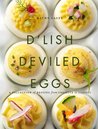
Review: D'Lish Deviled Eggs |
D'Lish Deviled Eggs: A Collection of Recipes from Creative to Classic
by Kathy Casey
My rating: 5 of 5 stars
D'Lish Deviled Eggs / B00AZKUERY
I love this cookbook so much and I keep coming back to it again and again. I know that seems silly, like, what more can you do with deviled eggs than the basic recipe? But this book has the best base recipe *plus* awesome variations with pulled pork, buttered corn, pimiento cheese, and a zillion other flavor combinations. For someone who really likes deviled eggs and has a lot of picky eating issues, this cookbook is great because it's good at presenting ideas (with gooooorgeous pictures) and letting you experiment with those ideas. "Hmm, what if Classic Picnic with Bacon Cheddar?" WHAT IF, INDEED.
NOTE: This review is based on a free Advance Review Copy of this book provided through NetGalley.
~ Ana Mardoll
|
Review: Holiday Cookies |
Holiday Cookies: Showstopping Recipes to Sweeten the Season
by Elisabet Der Nederlanden
My rating: 5 of 5 stars
Holiday Cookies / B01N6FSVZB
I seriously thought I reviewed this months ago, but it turns out I got lost in cookie making and forgot! I picked this book up on NetGalley thinking "oh, Ana, how many more holiday cookie books do you NEED when you own so many already" and it turns out the answer was "AT LEAST ONE MORE".
I love this book. I love the recipes; they're simple, and easy to read and follow. I love the pictures, oh gosh, the pictures. There is a picture for each recipe (as god intended for recipe books!) and they are all so gorgeous I want to lick the page. I love the variety; oh sure, we start with gingerbread and pinwheels and chocolate chunk but in no time whatsoever we're serving up cookies from Sweden, Italy, Austria, South America, Denmark, Mexico, and so forth. It's largely a very European selection and I would've loved to see more global variety (maybe for a sequel? please?) but what we have here is scrumptious, yummy, and there's almost certainly something here that isn't already on your cookbook shelves.
There's also some amazing decorating work on the pages, and some creative ideas like cookie place cards (for settings at the table) and one of the prettiest 3-D Christmas tree cookies I've ever seen. The section on gingerbread houses comes with guides for you to trace and cut out on paper. (Though this won't be much use, probably, to kindle users. I wish cookbooks would start writing the measurements on guides now that tablets are becoming ubiquitous.) If you love winter cookies--and these are definitely winter/yuletide/christmas cookies, don't be mislead by the "holiday" in the title to think there's a Labor Day cookie in here--this is a great book for your collection.
NOTE: This review is based on a free Advance Review Copy of this book provided through NetGalley.
~ Ana Mardoll
|
Review: Baking Class |
Baking Class: 50 Fun Recipes Kids Will Love to Bake!
by Deanna F. Cook
My rating: 5 of 5 stars
Baking Class / B06XPQX1ZC
This is an extremely cute little book which I think would be great for small children wanting to get into baking--especially if they've been watching cooking shows for years (like my nephew) and wanting to dip their toes in the water. The graphics are colorful and helpful, and the steps are easy to follow. I love how all the helpers in the book are kids (with a good variety in racial representation!) because it really emphasizes that yes, kids CAN do these recipes and so can the kids reading along at home.
The selection of recipes here is not the widest or most diverse. The bread section is loaf bread, banana bread, cinnamon rolls, pizza dough, etc; the cookie section is chocolate chip, oatmeal, sugar cut-out, snickerdoodles, etc. I do feel like a follow-up book could branch out just a wee bit into some more multi-cultural directions than just what would've been incredibly safe and familiar to me as a white American kid. I don't think this is a point of criticism for the book, just something I wanted to note for potential buyers.
This is definitely a book for KIDS, though. Some baking 101 books are accessible for adults, but this one is geared strongly for the under-12 age crowd. As a birthday or holiday present for a kid wanting to get into baking, though, I think this would hit the spot. Helpful, colorful, cheerful, and creative within the confines of the "safe" recipes served up on the page.
NOTE: This review is based on a free Advance Review Copy of this book provided through NetGalley.
~ Ana Mardoll
|
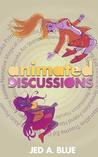
Review: Animated Discussions |
Animated Discussions: Critical Essays on Anime
by Jed A. Blue
My rating: 5 of 5 stars
Animated Discussions / B072N4C1ZR
I'm a big fan of deconstructions like Fred Clark's series on Left Behind and Mark Oshiro's "Mark Reads" series of books. I followed Jed Blue on Fred Clark's site and was pleased with his thoughtful comments, and a friend recommended that I needed to read his essays on Revolutionary Girl Utena and Fullmetal Alchemist Brotherhood. I'm so glad I did!
This is a series of incredibly thoughtful essays on the writing, tropes, and narrative arcs within a number of popular anime series. Even if you're not a fan--I haven't watched all of the anime featured herein--there's a lot here to enjoy and learn from; Jed's observations have made me think a lot about the craft of writing and what my own ultimate intentions are when I sit down to create.
For actual fans of the series, though, there's so much more. The Utena essays are very much my favorite, and gave me a much more nuanced view of the series; so much so that I wanted to sit down and re-watch the whole thing after reading. I especially love the discussion around Utena's deconstruction of gender, misogyny, and the difference between "saving" (the job of the Prince) and "helping" (which carries real pain and risks, but is ultimately more respectful and loving).
Regarding the ending of the series, Jed writes: "Utena finally takes the action which proves she has grown beyond the old, Dios-derived ideal of the prince: she holds out a hand and lets Anthy decide whether to take it. She is no longer saving, but helping, letting Anthy make the choice." I love this so much, and it's made me think a lot about my interactions with others and with my own creations.
~ Ana Mardoll
|
Review: Will Save the Galaxy for Food |
Will Save the Galaxy for Food
by Yahtzee Croshaw
My rating: 5 of 5 stars
Will Save the Galaxy for Food / B01N666JEG
I went into WSTGFF knowing I would like this book because I like all of Yahtzee's books, but came out pleasantly surprised by how *much* I liked this book.
The premise is wonderful, and I commend Yahtzee for his creative range. WSTGFF follows a washed-up star pilot who is struggling to make ends meet now that teleportation technology has made star piloting obsolete. Our protagonist gets by on odd jobs as a tour guide and the occasional ferrying of an outlaw on the run from the government, but he's only barely scraping by and staring down the barrel of destitution and failure. When he's hired for a "private flying gig" and asked to go by another name than his own, he's desperate enough to agree--any monetary port in a poverty storm!--but he's not expecting the difficulties posed by his new employer or the baggage attached to his new name.
|
Review: Hyperbole and a Half |
Hyperbole and a Half
by Allie Brosh
My rating: 5 of 5 stars
Hyperbole and a Half / B00BSB2AE4
If I could purchase this book for literally every human I know, I would. The book is funny, sure, and it's easy enough to see that from the free material on Allie's website. Her drawing style is awesome, her storytelling is hilarious, and her sense of humanity is funny and poignant all at once. There's funny material and stories in here that you haven't seen before and that alone is worth the cost of admission.
But what is really special about this book is the raw humanity Allie brings to the page. She talks beautifully about depression in a way that resonates deeply with me. The essays about how she beats herself up for not being a truly good, pure, perfectly-motivated altruistic person hit so close to home for me. She talks about feeling like a terrible human being because she's motivated by selfish reasons like "don't do a bad thing because it will make me a bad person" or "be nice because I want people to like me" or "follow this convention to avoid social consequences". I know those feels--the feeling that everyone else is good but you're a dirty faker because you're doing "good" things for the "wrong" reasons. Reading Allie's words made me feel less alone and a little less hard on myself.
This book is good and you will laugh and probably cry.
~ Ana Mardoll
|
Review: Pride and Prejudice (Manga Classics) |
Manga Classics: Pride & Prejudice
by Stacy King
My rating: 5 of 5 stars
MANGA CLASSICS: Pride and Prejudice / B01LW0JIK6
I love a lot of Jane Austen, but I've always been the odd one out in English major circles for not caring much for Pride and Prejudice. I liked the plot just fine, but I never could get around not liking Darcy. At all. Even a little bit.
No, no, come back! The thing is, despite the fact that he's very proud and reserved and shy and such, it did feel like he spent so much of the novel being rude to Elizabeth that it was hard for me to stomach the turnaround later. This manga adaptation of P&P does an excellent job of overcoming that barrier for me by adding that most powerful tool in the actor's toolbox: facial expressions. We're able to see Darcy's embarrassment, chagrin, and regret as actions unfold and I find I like him so much better when his cutting remarks are accompanied by a wincing expression as he reflects on what he's just said.
Overall, I feel this is an excellent adaption of the source material and I stayed up late reading until the end, which is quite a feat given that I already knew the ending! The art is gorgeous, especially for Elizabeth and Jane, and I feel that the supporting characters and side panels are well-depicted in ways that better foreshadow Darcy's concerns (which make his actions easier to stomach, understand, and forgive). I will add that there are some cutesy "chibi-style" panels where Mrs Bennet is a little tiny doll waving her arms around; nothing manga fans won't be used to.
The only thing I did not like is that Mr Collins is drawn in a very strange style and he stands out against the more realistic characters; I realize we aren't supposed to like him but his cartoonish appearance in contrast to the others made his arc difficult to enjoy. It was just very jarring. I considered taking a star off for that, but the rest of the book is so good that I think it overcomes that fault. I'll say 4.5 stars, rounded up.
NOTE: This review is based on a free electronic Advance Review Copy of this book provided by the publisher through NetGalley.
~ Ana Mardoll
|
Review: She Walks in Shadows |
She Walks in Shadows
by Silvia Moreno-Garcia
My rating: 5 of 5 stars
She Walks in Shadows / B014NLK4EI
SWiS out of Innsmouth Free Press is an all-woman Lovecraftian anthology of original stories and art, and it is a lovely addition to any library. I read it over Halloween, dragging myself out of a particularly nasty reading slump, and was delightfully terrified by several of the stories. (I never before thought I would be terrified of corn, ya'll. Corn.)
Let's get the warnings and shopper-caveats out of the way first.
1. As with any anthology, some of the stories are great and some of them are not as shiny. I read all of the stories for my review, but would caution most folks to go in with a mentality that if a particular story isn't working for you, skip it. Come back to it later if you must, or not at all if you prefer. It's fine. Don't force yourself to read something you don't enjoy; there's no book report after.
2. If you're coming straight from a Lovecraft "short story" reading binge, these new stories will feel VERY short indeed; it's interesting how the standard length for the genre has changed over time. In some cases, the shorter length seems detrimental to the story; there's not room to indulgently spread out in the same way HPL could and did in order to really build suspense and weave terror into the mundane. In other cases, the story itself doesn't suffer from its brevity but the reader may—"BUT WHAT HAPPENS NEXT!" was regularly shouted at my kindle. Again, this is standard for anthologies, but something to be aware of; I wish and hope that some of these authors can be commissioned again for fuller stories in this genre.
3. Speaking of HPL, these stories aren't just forays into the "weird tales" genre; most of them are straight-up Lovecraftian in that they reference ~actual~ HPL characters. If you aren't familiar with the lore, I believe you can still keep up (I did, even though there are a few HPL stories I've yet to read); if you ARE familiar with the lore, there is always the risk that tie-in mentions may feel a bit... twee? This is going to be super subjective to the reader, but I wanted to mention it. (And I do question the editorial decision to place both of the Asenath stories NEXT to each other; that was weird and jarring and one of those moments where you're reminded that all this is make-believe, which is detrimental to the atmosphere, in my opinion.)
4. On a more delicate topic: Trigger warnings. I don't really know how to warn for a book without treading into spoiler territory, but I don't think it's too far out of line to state that this is a VERY DARK horror anthology. Children (both born and unborn), pets, women, and old ladies fare particularly badly in many of the stories, and sometimes in graphic ways. Several of the stories deal with domestic abuse. As a survivor myself, I found the stories to be vibrantly terrifying and I enjoyed them, but do be aware of your triggers and practice self-care wherever you can. (Also, to fellow survivors: please remember that you are brave and amazing and wonderful. <3)
5. I won't review each of the stories individually, but quite a few of them rocked my world and left me wanting to cower under the covers. Violet Is The Color of Your Energy was horrifying in that special queasy-pit-in-your-stomach kind of way. De Deabus Minoribus Exterioris Theomagicae is ~amazing~ and I really need Jilly Dreadful to be commissioned to write all the things. Lavinia's Wood was a great pitch of creepy Lovecraftian evil. Chosen made me weep, as did Bitter Perfume and Eight Seconds, although I really wanted the latter two to be longer. The Eye of Juno was wonderful. And Provenance needs to be a full length novel and a movie and everything, because it was just so so good and wonderfully captures that Lovecraftian feeling of living out a mundane existence under a shadow of inescapable horror.
6. Wow, these stories are incredibly diverse, by the way! There are a lot of stories here about women of color, which is a very welcome addition to the Lovecraftian canon; another story includes a character who is either a gorgeous trans boy or a very dashing butch lesbian—either way, all the love to nu-Asenath in The Thing on The Cheerleading Squad. Older women are included here, as are women with various disabilities (including a woman who uses a wheelchair!). All of these characters are beautifully well-rounded and it's really wonderful to see an anthology which includes a wide variety of men and women, rather than sticking to the cis white men Lovecraft favored.
Caveat to #6: I am a white cis woman and there are going to be things that fly under my radar or which I find questionable yet am not qualified to comment on. One of the early stories uses the N-word in reference to the HPL cat; yes, the cat is a reference that readers will recognize, but I don't know that the actual word needed to be used. One of the stories is set within the framework of a plantation and which I am not qualified to review; another is about a white explorer who marries a much younger native guide. One of the stories talks about blonde hair and blue eyes as markers of a specific type of supernatural ancestry. In short, there are places where the authors are engaging with the world lore that we have courtesy of HPL, his rampant racism included, but I'm not always sure when that engagement is successful or not. I don't think this is a mark against the anthology but (again!) it's something to be aware of going into your purchase and it's something to be aware of regarding my own review.
Bottom-line: Should you buy this anthology? I'm glad I did! I definitely recommend it for the kindle price if you (a) like the weird tales genre, (b) don't mind Lovecraftian characters being name-dropped in your stories, and (c) won't be triggered by the deliciously horrific content herein. Also, supporting lady-authors and artists (especially diverse ones!) and independent press is always a good idea in my book.
~ Ana Mardoll
--- TABLE OF CONTENTS ---
Ammutseba Rising | Ann K. Schwader
Turn On the Light | Penelope Love
Bring the Moon to Me | Amelia Gorman
Violet is the Color of Your Energy | Nadia Bulkin
De Deabus Minoribus Exterioris Theomagicae | Jilly Dreadful
Lavinia's Wood | Angela Slatter
The Adventurer's Wife | Premee Mohamed
Lockbox | E. Catherine Tobler
Hairwork | Gemma Files
The Thing on The Cheerleading Squad | Molly Tanzer
Body to Body to Body | Selena Chambers
Magna Mater | Arinn Dembo
Chosen | Lyndsey Holder
Bitter Perfume | Laura Blackwell
Eight Seconds | Pandora Hope
The Eye of Juno | Eugenie Mora
Cthulhu of the Dead Sea | Inkeri Kontro
Notes Found in a Decommissioned Asylum, December 1961 | Sharon Mock
The Cypress God | Rodopi Sisamis
When She Quickens | Mary Turzillo
Queen of a New America | Wendy N. Wagner
The Opera Singer | Priya Sridhar
Shub-Niggurath's Witnesses | Valerie Valdes
Provenance | Benjanun Sriduangkaew
The Head of T'la-yub | Nelly Geraldine GarcĂa-Rosas (translated by Silvia Moreno-Garcia)
|
Review: The Scarlet Letter (Manga Classics) |
Manga Classics: The Scarlet Letter
by Stacy King
My rating: 5 of 5 stars
The Scarlet Letter (Manga Classics) / 978-1927925331
I've been a fan of Hawthorne since college, but I'll be the first to admit that his prose can be pretty heavy to wade through in parts. I've been wanting to re-read Scarlet Letter for years but it's just not something that I can sink easily into after a long day. So when a review copy of this book came available on NetGalley, I snapped it up as fast as I could, and ended up reading it in a single sitting that day.
First of all, the artwork in this manga is gorgeous. The book is fully black-and-white (which is my one complaint; the color cover is just stunning) and the rendering of the faces is incredible and evocative. Each character is rendered uniquely and is recognizable to me, which is always a big plus for graphic novels. The scenery shots, too, are gorgeous and there is no skimping on detail. Seriously, I would recommend picking this up based on the art alone.
Regarding the adaptation of the story: I love it. I haven't read Scarlet Letter in years, so there might be some details that I've missed, but this feels like a very faithful adaptation of the original. In some ways I almost like this adaptation better; I found Pearl and Dimmesdale to both be much more sympathetic here than I did in Hawthorne's novel, I think in part because of the emotive expressions rendered through the artwork. When Pearl is throwing flowers at the badge, for instance, she genuinely looks like a small child playing a game rather than a fae creature tormenting her mother (as Hawthorne was sometimes wont to render her). The added visualization made the story feel more real.
My only other real criticism of this is that I wish the publisher would make a kindle version; other manga series have done well in electronic form, so why not these? I hope they expand that as an option in the future.
NOTE: This review is based on a free electronic Advance Review Copy of this book provided by the publisher through NetGalley.
~ Ana Mardoll
|
Review: Resident Evil: Caliban Cove |
[Content Note: Mental Illness, and poor treatment of same in literature]
Resident Evil: Caliban Cove
by S.D. Perry
My rating: 5 of 5 stars
Resident Evil: Caliban Cove (Book 2) / 9781781161869
I was a big fan of S.D. Perry's first book in this series (The Umbrella Conspiracy), and Caliban Cove continues to deliver the same level of enjoyment and superb writing. I'll note upfront that I haven't played the video games, so I don't know how well these books match the game-canon, but in terms of zombie novels set in the Umbrella mythos, this series delivers great action, wonderful characterization, and a lot of suspenseful thrills.
Caliban Cove picks up after the end of Umbrella Conspiracy: the STARS team members who came back alive from the mansion are on the losing end of a conspiracy theory to cover up the virus spill, and one of the few allies they have decides to launch a raid on another Umbrella facility in order to get the evidence they need to clear their good name. For the raid, he needs the help of Rebecca Chambers, along with a group of genuinely well-characterized folks whose survival is NOT assured since (as far as I know) none of them ever show up in the video games. So the tension is ratcheted up immensely when Anyone Can Die.
In terms of the good stuff: S.D. Perry is obviously a very skilled writer. Some franchise novelizations are very poorly written and/or poorly plotted (which, as a dedicated Aliens fan, I know all too well!), but Perry's novels are in my opinion just as good as anything else available at your local bookstore and aren't trying to coast crappy writing on the strength of the franchise label. So even if you're not a hardcore fan of the Resident Evil series, these books are genuinely good zombie/monster novels with a lot of isolation and suspense and creepy thrills to make the books genuinely engaging. The characters do occasionally engage in foolish behavior in order to facilitate the plot, but it's obvious that Perry does her best to handwave these events so that they're not *too* jarring.
As far as the bad goes: My biggest disappointment with this series is its total embrace of the idea that evil people are mentally ill and that mental illness equals a dangerous menace to society. I realize that the people in charge of this franchise probably think someone would have to be "crazy" to want to zombify the world, but (a) the movies have thoroughly demonstrated other just as plausible reasons (greed, cruelty, elitism, stupidity, malice, a desire to lord over the ashes of society, etc.) and (b) blaming all this on one "mad scientist" completely obscures the many just-as-dangerous "sane" people who gave him a laboratory and zero oversight in the first place. The book even opens with a quote about how evil really needs mental illness in order to properly thrive (“Through avarice, evil smiles; through insanity, it sings.”) and it comes off as unnecessary and jarring. Whether you can swim through this to get at an otherwise good story will vary by reader, I think.
If you won't be bothered by the repeated hammering on mentally ill people (most of whom are far more likely to be hurt by non-mentally ill people than they are to harm anyone themselves), then there's a good zombie story in here. Note that these zombies aren't quite your "typical" zombies, as the ones in this book are able to carry and use guns and otherwise respond to stimuli (which I enjoyed for variety's sake but some purists may not).
~ Ana Mardoll
|
Review: Harvest Moon, A Tale of Two Towns (3DS) |
Harvest Moon: Two Towns (3DS) / B004XIQPAO
I've been a Harvest Moon fan since the first game came out on the SNES. Some of the latest installments have been a little disappointing, like the ones which take out the marriage and courtship aspect. But Tale of Two Towns perfectly recaptures the magic of Harvest Moon by beautifully balancing farming with the social aspects (which are my favorite parts of the franchise).
Two Towns starts off with two "rival" villages, and it's up to the player to patch things up. One town (Bluebell) is livestock-oriented and with the standard Harvest Moon European country village flair; the other town (Konohana) is crop-oriented and has a beautiful Eastern style, with paper lanterns hanging from the eaves. The player picks a village (though the player can change villages later, if desired) to live and work in and focuses on rebuilding relationships between the villagers.
The beauty of this setup is that it balances a high replay value (two villages = two playthroughs) without cutting off content from the player. Bluebell players can still farm crops, they just have smaller fields to work with (or have to commute to Konohana to grow crops there at the "extra" farm; this works well with crops that don't need daily watering). Similarly, Konohana players can still raise animals; they just have a smaller farm. This balancing act works really well when you consider that earlier HM games made it pretty much impossible to tend to a full barn AND a full field at once. (Leading to exploits like time not passing indoors, or having to hire farmhands to help, or having to work all night long, etc.)
This installment also does a great job of playing up the social aspect and cooking aspect: there are 4 cooking festivals per season (so 16 total per year) plus various livestock contests, pet contests, dating holidays, etc. All of this is optional, but since a major game goal is to build relationships between the towns, it's valuable for the player to attend and/or participate since participation builds the "heart meter" between the towns. (The Harvest Goddess helpfully keeps a running track.) All this works towards making you feel like you're achieving something between two communities, and not just building up your finances.
Other neat things about this Harvest Moon:
1. Villager (and Bachelor / Bachelorette) hearts are visible through a "flower number" that frames their dialogue box, so you don't have to hunt for diaries.
2. Mountain exploration (including herb gathering and fishing) feel like integral parts of the game.
3. Livestock is easier to herd than in many previous HM games, making outside feeding not only viable but desirable (since time spent outdoors increases livestock happiness). And the pets in the game (you can own up to 6) will automatically herd your livestock in and out of the barn for you, once their heart levels are high enough.
4. Crops can be planted in plowed rows, which means that one row only has to be watered and/or fertilized once. No more tedious watering each and every square.
5. A "request" system has been implemented which lets you bring requested items to villagers for heart increase, money, and item rewards. This is hugely fun and addictive.
6. Though the two villages are separated by a mountain, it is more than easy to visit both villages in a day. (And indeed I visit them both nearly every day as part of my play-style.) You can also spend the night in the opposite village if you need to start your morning there for whatever reason.
7. The available dating partners (boys for girl players to date and girls for boy players to date; I am disappointed to see HM still has not apparently implemented same sex relationship options) are all interesting and fun people to get to know; I appreciate the series' tradition of making well-rounded characters to interact with.
8. Item management is both easier and harder to manage than before. "Easier" because dropped items don't disappear immediately (which means you can't accidentally drop stuff and lose it forever, thank goodness) (though they will disappear overnight, so remember to pick up your pet toys before bed); "harder" because some items *will* still rot in your cart storage over time, plus you have a finite amount of space (in contrast to the Unlimited Refrigerator in Back to Nature). This adds an interesting inventory management angle to the game--you can't pack rat everything, so you *will* have to decide what to use, what to give away, and what to sell.
9. There's an online/friend play system which I haven't used, but which lets you plant crops for others to harvest in a special "online sharing" area (near the Harvest Goddess' spring) and (in turn) harvest crops from their shared area. This seems like a thing I would have enjoyed as a kid, even though I probably wouldn't use it now.
10. I don't always like how games implement the DS touchscreen, but this one handles it very well in my opinion. The touchscreen is largely for inventory management, but you *can* manage your inventory without touching the screen--in other words, using the stylus in this case is optional, and you could also use the D-pad and buttons to move things from your inventory to storage and/or the shipping bin. The touchscreen also shows farmer details (like outfits and requests), and there's a "petting" mini-game with the animals which is completely optional. Almost everything the touchscreen does, therefore, is optional, which is how I like it.
To sum up: This is probably my favorite Harvest Moon game since Back to Nature (for the PS1, and which I still hold to be the best in the series). I highly recommend it, especially if you're a player who goes in for the community / festival / dating aspects of these games.
On a final note: I note a lot of people having bug issues with this game freezing. I bought a used copy of the game (so I can't vouch for how clean the cartridge is), and have played it on a 2DS (note well: 2DS, not 3DS) for weeks. The 2DS is still at the basic factory settings; I won't update the software until it becomes necessary for some reason. With that said, I have *NOT* experienced the game freezing. Not even once. So take that for what it's worth: my copy of the game has worked fine on a factory-settings 2DS.
~ Ana Mardoll
|
Review: Longbourn |
Longbourn
by Jo Baker
My rating: 5 of 5 stars
Longbourne / 978-0345806970
I've never been a huge fan of Pride & Prejudice, though I freely acknowledge Jane Austen's skill as a writer. But I've always been more interested in the lives of the serving girls than the lives of the women upstairs, with their balls and shoe-roses. (Seriously, Margaret Atwood's Alias Grace is one of my favorite novels specifically *because* of all the servanty bits.) So as soon as I heard of Longbourne on Sarah Wendell's review site (Smart B------, Trashy Books), I knew I would love it.
I sped through this book over the course of three days and bitterly resented every moment that I had to put it down! As other reviewers have mentioned, this book is more "around" Price & Prejudice than "about" it, and the format of the one novel serves as a perfect backdrop for the material in this one. Jo Baker's writing is superb and evocative, and fits well with the language I expect in a Regency without being turgid to slog through. Baker has wholly embraced the servant framing, and we receive all the world-building of that sort which you could possibly hope for, and she perfectly interweaves characterization through the daily grind of chores.
What I like most about this novel is how it focuses so well and so thoroughly on its entire cast of characters. Whereas this might be confusing or jarring in another novel, the multiple characters work well here and we care deeply about exploring the romantic relationship between Sarah and the men in her life, and the surrogate familial relationship between the servants in the household as they quarrel and love and comfort and scold and shelter each other. The result is realistic without being too harsh, touching without being saccharine.
I struggle with recommending this book without giving too much of the plot away, but I will touch briefly on the issue of Mr. Bennet. I will say that I have never much cared for Mr. Bennet--yes, he is the comic relief and gets the best lines, but he is also harsh to his family members and careless of his daughter's futures. Longbourne explores this side of his character further, pointing out (for example) how callous it is for him to receive Mr. Collins for a stay without alerting the household staff. The staff not only have to prepare at short notice for a guest, they also need to impress Mr. Collins deeply so that he will not dismiss them when he inherits the house. I thought this handling of the character of Mr. Bennet was realistic towards what was displayed in the original P&P novel; here he is not overtly villainized, but his casual self-indulgence does provide some of the conflict for the servants to overcome.
If I can find fault with this book, it is that at the 3/4 point there is an extended flash-back which is well-written but could not hold my interest as I was too anxious to find out what would happen in the future to take time out to hear about the past. This is important to the characterization in the novel, though, and I don't feel right complaining that the book hooked me so deeply that I couldn't wait to turn each page!
A couple more things I want to mention that gave me great pleasure: One, this is the first Regency book I've read which has a black man as both a major character *and* as a viable party in a love triangle. I felt like this was handled fairly well, and he is treated in the story with respect from most parties and like it would be no big deal for Sarah (who is white) to marry him. Even the characters who react to him in (relatively mild) racist ways do acknowledge that he's the handsomest man in town and certain to turn the girls' heads. I loved that.
Two, this is also the first Regency book I've read which has a gay man in it. And even better, the book strives to not treat him like a rare unicorn: one line which particularly pleased me was "The farmhands—at least, those of them that tended towards the liking of women—stopped and stared, mouths hanging open, as she went by in Mary’s pretty cast-offs." Of course, I haven't read a ton of Regency books, but it seems (in my experience) that a lot of authors tend towards entirely white casts and heteronormativity; I appreciated that Jo Baker didn't do that for her novel.
Probably the best compliment I can give Longbourne, though, is that it made me want to read Pride & Prejudice again (something I'd decided I'd had enough of for a lifetime) just so that I can relive the lives of Sarah and Mrs. Hill and James and Polly and Mr. Hill all over again in my imagination. I strongly recommend this book and consider it the best fiction I read in all of 2013. (And I most seriously hope that Jo Baker decides to tackle Sense & Sensibility next, if she sticks with Jane Austen as an inspiration.)
~ Ana Mardoll
|
Review: The Princes in the Tower |
The Princes in the Tower
by Alison Weir
My rating: 5 of 5 stars
The Princes in the Tower / B007I5QO50
I am very fond of Alison Weir's histories, and have an interest in the Princes in the Tower, so I expected to enjoy this historical account, even knowing that it is several years old now (and now somewhat out of date since Richard III's bones have been disinterred from the car park). Having read this book twice -- both before and after the disinterment -- I am perfectly satisfied that it lives up to Weir's tradition of excellent writing and engrossing scholarship.
This is one of Weir's shorter books, and it is possible to whip through the material fairly quickly. She starts by outlining her sources and their nearness to the matter and what she means by "contemporary", since the scholarly material spans a large period; she also scrupulously identifies the biases and shortcomings of her sources, and then explains *her* view on their accuracy in light of that. It is left as an exercise to the reader to decide whether or not to accept her view, and I appreciate that the decisions made by historians in the search for truth are open and exposed to the reader for them to make their own choices.
Weir then traces the circumstances surrounding the birth of the princes, the controversial choice of their mother (Elizabeth Wydville) as queen, the subsequent alienation of many members of court at being replaced in the King's favor by a family seen as ignoble and greedy, and the events which occurred immediately following Edward IV's death and how Richard III was able to quickly imprison the new child king (Edward V) through a swift and brutal campaign of terror.
Weir outlines the contemporary rumors and beliefs of both foreign royalty and common Londoners, and makes the case that Richard's contemporaries certainly believed it very plausible that he had the princes murdered (though some, as with Louis XI, believed the princes were dead or as-good-as-dead a few days earlier than Weir believes the actual event occurred -- an understandable mistake on Louis XI's part since the precise date of the murder wasn't heralded from the Tower with trumpets). These contemporary beliefs are laid out scrupulously in order to point out that Tudor propaganda cannot be entirely to blame for Richard's grim reputation, not when his pre-Tudor contemporaries already believed him guilty. Once again, it is left to the reader to balance how much weight to give these beliefs, but I personally feel that Weir makes a convincing argument for the case that Richard is the most plausible responsible party for the deaths of the Princes.
I was initially puzzled by the number of poor reviews on the book. Having now read the book twice, along with several negative reviews, I have to strongly agree with a previous review (MS) who stated that "Many of the criticisms I've read in other reviews are based on isolated paragraphs which have either been misunderstood or taken out of context." For Louis XI to believe, a few days earlier than the date proposed by Weir for the murder, that Richard either had or would soon murder the Princes does not point to a scholarly error with dates; Louis XI's suspicions are mentioned only to underscore contemporary beliefs, and not in support of the date of the murder. And for Margaret Beaufort to be able to convince Elizabeth Wydville of her sons' death, but for Henry VII to still retain a small doubt, years after his failure to find the bodies, is in no way something to marvel at in my opinion -- these differences in the perspectives of Elizabeth Wydville and Henry VII reflect the realities and context of their lives as a grieving mother and an insecure king. For some reviewers to seize on these as somehow "proofs" of poor scholarship make me very dubious.
In summary, I believe this is an engrossing and relatively quick read to the subject, and I strongly recommend it to fans of Weir's other work. I appreciate that Weir clearly lays out the flaws in the available sources and guides the reader through her decision-making process, so that engaging readers may choose to make different choices. And I believe that a number of the so-called errors and contradictions in this work seem to me to be entirely plausible when considering the nuances of the personalities and political realities involved in this historical period.
~ Ana Mardoll