


The dark humor and cartoony graphics combine well if you're into that sort of thing (and I am). But the game suffers from a common problem that plagues many sims: once you have a good routine down, you're just grinding resources until you earn enough to cash in for an ending. My last game clocked a total of 14 hours, but I had most of the "therapy rooms" built at around 5 hours, and the remaining 9 hours was just letting the game run on autopilot in the background until I racked up enough resources to win the game. There are options to grind for upgrades to the therapy rooms, but they aren't very excited and just boil down to either "more decorations" or "more earned money" for each room. So a large portion of the game felt a bit of a slog, and I'm not seized with a desire to replay another cult flavor (the current options are Peace & Love, Aliens, and Darkness) because I can tell not much will be different in terms of core gameplay.
I will say, the game author(s) seem very much aware of this problem, but I don't really like the solutions they're trying out to combat the issue. For example, every so often protesters will show up to picket your cult and you have to figure out which cultists are best to send out to talk them down. The problem is, the entire premise of the game is that you (the cult leader) see all your followers as interchangeable dupes, so it's a bit off-message to suddenly have to pour over which one appeals best to Logic and which one values Emotion in order to vibe best with the picketers. Another attempt to jazz up the game can be seen with random events that happen during missions; the problem with these is that I hate doing missions and the funny random events didn't really make them feel any less of a hated obligation.
If I could make a wishlist for the game, I think it would be:
- Give me a bigger compound to build in. Some of my members want private bedrooms, but there's no room for anything but big barracks-style housing and a huge privacy-free bathroom where everyone does their business out in the open. Maybe we could upgrade to a bigger compound over time, as that would give me something to do with this pile of money that I sleep on every night.
- The "decor" category is huge and unwieldy to scroll through. It needs sub-categories for things like statues, tables, novelties, etc. They also start to feel pointless when all they do is increase the "status" of a room. Can you implement some kind of stat-boost for specific items in specific rooms: "important documents" speed up research, while the "teapot" speeds up cooking in the kitchen? Etc. Speaking of, give me fewer things that take up precious floor space and more things that I can hang on walls, please!
- I cannot give a 5-star sermon to save my life. Adjust the requirements for this to be less unforgiving, please? Speaking of unreasonable standards: 100,000 Influence points for a Steam Achievement is insane. Did you mean 10,000? Because I spent 14 hours on my last play-through and got 26,000 Influence by the end. I didn't want to sink another 42 hours into that save file just to snag the achievement, you know?
- The therapy rooms are interesting, but I want more of them! It feels very limiting that we only end up with half a dozen types of rooms. I wanted more rooms and (possibly) to have to choose which sorts of rooms my cult would specialize in. Picking my cult flavor only gave me one new room (the Maypole Dance room, which was admittedly VERY COOL, nice Wicker Man!) whereas I wanted so much more. There's so many flavors of 1970s chicanery to choose from--magnets, spoon bending, psychic card decks, blurry photographs, faith healing, and so forth--and it just feels very disappointing to be limited to maggot baths and yoga mats.
- The writing in the random events is extremely strong and I enjoy them very much. I would perhaps expand that concept to occur outside the missions as well. Police could show up to tour the compound and the player's answers could affect whether your political Heat goes up or down. Family members could visit the cult members and that could affect Influence or Public Relations.
- Speaking of public relations, I want to be able to throw events at the compound, even if it's just a text box on the Mission screen. I kept expecting the PR missions to evolve from more than just radio appearances. Admittedly I didn't do very many of those because they kept increasing my Heat for no good reason and Heat is hard enough to manage as is. I would balance that a little better; going on a radio show or throwing a charity event or hosting a gerbil-adoption day shouldn't increase political heat like that!
- [Trigger Warning: Sexual Coercion] I was not planning to use the "Free Love" room at all and was a little annoyed to find that it was mandatory in order to receive the Peace & Love finale. It might seem silly that I'm cool with playing a game about exploiting free labor from victims of religious abuse, yet I draw the line at sexual coercion but I do. The room is a cool game mechanic (letting cult members share positive traits and stats after "learning" from each other...in bed) but I would *strongly* recommend implementing a statistical possibility wherein the chosen pair refuse to use the room because they're Just Not That Into Each Other; this would make me feel like they have a *choice* in the matter and are actively consenting when they do use the room. I have similar feelings about the incense room, for that matter.
Anyway, I have rambled enough and this is getting long. I enjoyed the game a lot, but I enjoy the IDEA of the game more than the implementation right now, if that makes sense. I hope that future implementations feature a little more variety and a little less slog.
|
Review: Honey, I Joined a Cult (Steam) |

|
|
Review: Planetbase (Steam) |

If you can get past the first 20 minutes, then it's basically autopilot from there. You can build almost all of the buildings available in the first hour of play and after that you're just keeping an eye on things while they zip along at 4x speed. There's no way to upgrade buildings or build vertically; you just have to sprawl outward. There's almost no luxuries for your little people, so you don't really come to care about them. It feels like this needs more content, somehow? Luxury lodgings and vertical buildings, maybe. Something to make your colony seem successful. As it is, the only difference between a starting colony of 10 and a city of 300 is how much space you're taking up: everyone still sleeps in bunk bed dorms located a single hallway away from their day job location.
|
|
Review: Yes Your Grace (Steam) |

That said, it should be noted that there's an overarching plot that you have very limited control over. Several times your options as King are basically "Yes/Yes, but". Especially early on, you are crowbared into several decisions that I simply would not have made, and it was particularly frustrating when the plot came back around to chide me for those "choices" that I didn't want to make in the first place. And in the last third of the game you're basically locked into whether you want to be nice to the invaders or nasty to them; the game even *says* at several points that you need to be 100% Nice or 100% Nasty in order to get help from 1 of the 2 available nobles you're courting for help. Not a lot of wiggle room for role-playing.
[Spoiler Note / Trigger Warning: Domestic Violence] To elaborate on how little guidance you have on the plot: Early on, you have no choice but to marry your 13 year old daughter off to a young prince who will then go on to beat her and ultimately burn her at the stake as a witch. You have zero option to help or save her; you can't even *try*. This is the story the devs wanted to tell and I respect that, but as a survivor of domestic violence it was really brutal to witness *bruises* on my daughter and have literally zero option as the king to do anything about it. I would REALLY like a DLC option (for which I would pay!) that gives you the chance to launch a rescue mission with one or more of your agents. It just feels railroad-y that this terrible tragedy must happen so we can all be sad over it. Sigh.
Those issues aside, I enjoyed this game. But I don't think it has any replayability value whatsoever after you've made it to the ending in one piece. You're basically on a single plot-rail the entire time, so the only "choices" you really get to make is how to manage your gold and food supplies. While that affects whether the plot goes well or not, it doesn't really unlock new content, if that makes sense.
|
|
Review: Amish Friends Cookbook Desserts |
 Wanda E. Brunstetter's Amish Friends Cookbook: Desserts
by Wanda E. Brunstetter
My rating: 3 of 5 stars
Amish Friends Cookbook Desserts / 978-1616262921
There's nothing really wrong with this book, but there's also nothing really right. There are almost no pictures for the recipes, and it's not clear whether these even *are* pictures of the recipes or just generic stock photos of "apple pie", "pumpkin pie", etc. The recipes are short and sweet--about the size of a recipe card, which is convenient for storage but not if you want any kind of in-depth instructions. But if you're an advanced chef, I feel like you already know about these recipes; there's very little in the way of variety or invention. If you have even a single church cookbook from the past 30 years, you have most of these recipes already. If you don't, then I guess this is a decent collection? But don't expect instructions or pictures to help you out.
NOTE: This review is based on a free Advance Review Copy of this book provided through NetGalley.
~ Ana Mardoll
|
|
Review: The Jezebel Effect |
[CN: Self-Harm, Disablism]
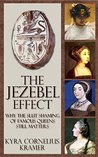 The Jezebel Effect: Why the Slut Shaming of Famous Queens Still Matters
by Kyra Cornelius Kramer
My rating: 3 of 5 stars
The Jezebel Effect / 9781508666110
I feel guilty not finishing this book, because this is exactly the kind of book that I've been wishing for years that someone would write. I love popular history books about women: I've read pretty much everything Alison Weir has ever written, I've read about Marie Antoinette and Cleopatra and Hatchepsut, I've read Eleanor Herman's Sex with the Queen. I've read all these books about the lives of famous and powerful women, and I've been struck by how much slut-shaming these women have been subjected to. Anne Boleyn is, of course, one of the best examples: it seems almost unthinkable to me that she was cheating on Henry, but of course that was what she was charged with and people still make that case--and much of the time, it seems that the case for her supposed sexual shenanigans is based not on actual *facts* but simply that many of us don't like her. So I have been waiting for a book that comes forward and ties all this together, something that points out that the sexual shaming of powerful women is a thread that runs through our social history.
"The Jezebel Effect" starts strong, and I think the introduction may well be its strongest part. Kramer points out politicians of our time period who are routinely slut-shamed despite the fact that the criticisms against them have *nothing* to do with sexual escapades. All of this will be familiar to feminists who follow politics, and will probably do little to convince the hardliners, but might reach some of the middle-grounders who may be overwhelmed (as well they ought to be) by the sheer amount of slut-shaming that Kramer compiles. It's only when we leave the introduction that things start falling apart a little.
For one thing, this feels like a very long book. I see that the paperback is 412 pages; I had the Kindle version so I can't verify that, but the book feels very, very long. This is always a tricky spot with popular history books that try to provide lots of examples: do you spend one chapter per Person of Interest and end up missing much of the meat of your argument, or do you exhaustively document as much as you possibly can? Each person of interest spans multiple chapters, and it's frustrating (as you can see in the book preview) that none of the chapters are labeled: chapter one would more rightly be called "Introduction"; chapters 2-5 are about Jezebel (except that chapter 5 is also about social media suicides); chapters 6-10 are about Cleopatra; chapters 11-16 are Anne Boleyn; chapters 17-19 are Katherine Howard (and given that she is the Tudor wife with the least well-documented history, much of this feels padded and speculative); chapters 20-23 are Catherine the Great; and chapters 24, 25, and 26 wrap up some thoughts.
The lack of labels makes it difficult to skip over pieces the reader may care less about; there's definitely a point midway through chapter 4 where I felt like "ooookaaaay, we've made the case about Jezebel, can we move on please?" and then chapter 5 suddenly throws itself rather unexpectedly from Jezebel into harassment on modern social media (Facebook, Twitter) and deals with the suicides of several girls who were harassed. The effect feels jarring, unfocused, and poorly edited. This impression isn't helped by the sometimes "chatty" feel of the writing, which would make sense in a blog format but here just feels padded and too much. Quotes like "Since he was the preeminent scholar on this topic, I'm willing to believe him" (in referenced to a quoted source), or "I suspect Anne [Boleyn] got her famous charisma from her dad" feel out of place to me in a work that is trying to be scholarly and serious. There are asides like "This is slightly off topic..." that go on extensively about Julius Caesar's sexual proclivities, and it just feels disorganized. I kept wishing an editor had tightened the book up.
The other main problem that stood out at me is the scholarship itself. This is going to be a huge problem in *any* book that tries to cover multiple cultures and time periods. People devote years of their lives on the Tudors alone (and many of them don't agree on lots of the details), so any compilation album like this is going to struggle to keep up. That's part of the reason why compilation pieces like "Sex with the Queen" stick to shallow single-chapters rather than epic 3-4 chapters per person, because once you get into that level of detail, you're probably going to put your foot in. One thing that stood out in chapter 1 was when Kramer stated that Mary I "usurped the throne from the lawful queen, Jane Grey"; the idea that Jane Grey was the legal heir is a theory I have never been exposed to before, and I've read Tudor history for years. (It's strongly arguable that Jane Grey herself didn't think her reign was lawful!) Little details like these, which are sometimes not-cited and can feel jarringly-wrong seem to distract from the larger feminist points; the reader isn't thinking "yeah, it's noteworthy that for various reasons Mary I wasn't slut-shamed despite being far worse than other queens" but rather is going to be distracted by "wait, no, English legal history is complicated and I'm pretty sure that's a blatant over-simplification."
Later Anne Boleyn chapters go off on a tangent about Henry's cruelty being "medically" driven. I note here that the author has written a book on this topic ("Blood Will Tell: A Medical Explanation of the Tyranny of Henry VIII"). I don't really want to get into that theory deeply here, except that it strikes me as odd that a feminist book about how men slut-shame and kill women would have a divergent note trying to find a "medical "explanation" for why a man would slut-shame and kill a woman. The fishing-for-a-reason feels especially odd when placed side-by-side with discussion from Kramer about "honor killings", as if white men need to be disabled or broken in order to do things that men of color sometimes do. And again, this could just be my own Weir fanishness popping up, but I just don't think Henry needs a "medical explanation" for his bad behavior. To give Kramer her due, she does make a good point about how we call it "domestic violence" when American men kill women, but "honor killings" when South Asian and Middle Eastern men kill women, but all this dovetails badly (imo) with trying to medically justify Henry's behavior, and ties into a thread of disablism that made me uncomfortable as a reader. (Chapter 1 states that "Isabella I even paved the way for the Spanish Inquisition, which only lunatics think was a good idea," which I find an incredibly poor choice of words.)
Flaws of organization, writing style, and historical details aside, I do think this is a good book with good ideas. Kramer makes excellent points about how the wooing of Anne Boleyn has been framed (both at the time and to present day), explaining how easy it is to call a woman grasping and ambitious when she is in a situation with limited choices and where her "no, I said no" is not being accepted. Whether you agree on a personal level with this interpretation of Anne Boleyn or not, I think it is valuable for someone to make the point that we socially see a woman's "no" as conniving for a better bargaining position. The fact that we think that way at all is a problem that we need to address.
I do tentatively recommend this book. It is a sprawling epic with a lot of flaws, but *any* such epic look at trying to tie together the slut-shaming of half a dozen queens would have had many of these same flaws; I view the flaws as inevitable considering the scope of the material. I do wish that an editor had been employed to strike out the more "bloggy" conversational style at times, I wish there was better organization of the material, I wish the chapters had been labeled, I wish the huge block-quotes of sources had been trimmed down and paraphrased (the Cleopatra chapters are particularly egregious of this, quoting Plutarch in bulk), I wish the minor-and-sometimes-debatable historical details had been vetted better or in some cases left out as immaterial distractions to the main point, I wish that the author had a stronger background in avoiding disablist language and themes (like seeking "medical explanations" for cruelty, as if sane and healthy men are not cruel to women all the time). But I do admire the intent behind the work and the point being made here. For the Kindle price, it's a steal and I recommend picking it up, and I wish the author all the best in her future efforts.
~ Ana Mardoll
|
|
Review: The Girl With the Dragon Tattoo (Graphic Novel) |
 The Girl With the Dragon Tattoo (Graphic Novel)
by Denise Mina
My rating: 3 of 5 stars
The Girl With The Dragon Tattoo (Graphic Novel) / B009DNVXX8
I'm a big fan of the Millennium Trilogy, having read the novels several times, listened to the audiobook narrated by Simon Vance, and own the original movies with Michael Nyqvist and Noomi Rapace. (I have not, for the record, seen the American remakes.) I selected this graphic novel at NetGalley with a great deal of excitement, fully expecting to enjoy it, but... well, I won't say I'm disappointed exactly, but I'm not enthralled.
This installment of the series takes us from the opening (with Vanger receiving the yearly flower) to maybe about a third of the way through the novel (where Lisbeth revenges herself on Bjurman). I want to recognize upfront that adapting this much material into a ~150 page graphic novel could not have been easy, and I think the adaptation author did about as good a job as could be hoped for.
The story and characters have been altered pretty radically, though, in order to convey emotion and urgency "on screen" through facial expressions and dialogue rather than narration. Erika Berger talks candidly about sex with Mikael Blomkvist and Christer Malm's sexuality at board meetings, Dragan Armanskij openly flirts with Lisbeth at work, Henrik Vanger cries on receiving the yearly flower, Lisbeth dances and laughs and flirts with Mimi in public, and so forth. Everyone feels like they're wearing their heart on their sleeve and that change doesn't really work well with the tenor of the story, I think.
The dialogue, too, has been changed pretty radically to support the format of the adaptation. Cecilia Vanger contributes more proactively to the investigation, and the old friend who sets Blomkvist off after Wennerström in the beginning has an entirely different story to tell. I think all these changes are fair enough, given the needs of an adaptation, but I'm less enthused about some strange Americanisms creeping into the dialogue. When Lisbeth confronts Bjurman, for example, she quotes Al Pacino from "Scarface" by saying "say hello to my little friend!" Things like that ended up jarring me out of the narrative, though others may feel differently.
A word on the art in this novel: it's not really my cup of tea. There's a lot of heavy use of shading and shadowing in panels to prevent having to draw facial details beyond a rough outline. Lisbeth is rendered very well, and her facial expressions are extremely vivid, but Blomkvist's face (and even the shape of his head!) seems to shift and change a little too much from panel to panel. It's also worth noting that the scenes of Lisbeth's rape are extremely graphic, with blood covering much of the panels -- this isn't a criticism so much as a caution to know what you're getting into if you purchase this volume.
On balance, I'm glad this graphic novel exists but it doesn't really "feel" like the story I know. I think this will be a great introduction to the series for people who are curious about the story but weren't able to get into the densely detailed books, and I consider that to be a good thing. But if you are a hardcore fan of the books, whether or not you like the adaptation will boil down to how you feel about the changes made in service to the new format. I'd give this book 3.5 stars, but I won't be picking up the next installment for myself personally.
NOTE: This review is based on a free Advance Review Copy of this book provided through NetGalley.
~ Ana Mardoll
|
|
Review: Resident Evil Extinction |
 Resident Evil: Extinction
by Keith R.A. DeCandido
My rating: 3 of 5 stars
Resident Evil: Extinction / 9781416544982
This is the third and final book in the DeCandido novelization tie-in to the Resident Evil series, and I have to say I'm glad to see the back of him as an author for this franchise; I hope whoever they got for Resident Evil: Retribution does a little better on characterization.
The plot aspects of this novel, like the two before it, are done well in my opinion. Extinction was probably the weakest of the first three movies in this respect; the plot was good but there was always the feeling that you were missing huge gaps of backstory and sidestory. This novelization delivers, and does a wonderful job of filling in the gaps between Apocalypse and Extinction, as well as explaining a lot of missing character motivation. We find out how the world went down the drain, why Alice left Carlos-Jill-L.J., where Jill is for the entirety of the movie, how Claire Redfield entered stage left, and how Umbrella is able to control Alice remotely. All in all, if you're just coming to this novel to fill in those movie gaps, I can strongly recommend it.
While I'm giving credit where credit is due, I'll also note that this is a rare example of a novel that handles frequent changes in POV character *and* in timeline without becoming confusing or cumbersome to follow. Because the Before and After settings in this case are so very different, the changes here are easy to follow and the reader is quick to acclimate to chapter shifts. I enjoyed that aspect of the novel, as well as the fact that Extinction is fast-paced and never seems to bog down, despite the many concurrent plot threads.
Where this novels falls down is where its predecessors also failed: whoever is in charge of the characterization for these novels -- whether it be the author or the franchise owners -- is not doing a very good job, particularly when it comes to minority characters. There's a return of the overuse of racial slurs and gendered slurs; this novel never seems to miss a beat to fling out a N* or a B* when presented with the chance, and to my mind it's overused and gratuitous. (I counted over 40 instances of B*, most of which are directed at Jill Valentine, who is repeatedly referred to as "white b*".)
Actually, Jill Valentine is good example of how badly written the minority characters are in this novel. I literally laughed out loud when the book asserts that Jill Valentine had, in the post-apocalypse world, let her "dark hair [grow] down to her ass, as she'd had no inclination to cut it". WHY does Jill Valentine not care about having short hair in a world with grabby zombies, equally grabby scavengers, and no shampoo for miles? Easy! She doesn't care about looking pretty anymore, so she's let herself go. Really, as the reader, you have to laugh or you'll cry, but if you're a woman, or if you've had to take care of long hair, or if you've read the Zombie Survival Handbook, or if you have a single ounce of common sense, you'll probably be ousted from the narrative when you encounter stuff like this. Or later when Jill has to roll into town and remind the local black police officer that he did promise to serve and protect his people, not hole up in his house with all the guns and wait for them to die. You can see how it could be hard to remember stuff like that.
The one character who does improve from the dreadful treatment he received in Apocalypse is L.J. Wayne. He's still not handled extremely well here, but we do at least receive the backstory on why he doesn't share his secret with the rest of the team, which was something that got left out of the movie entirely, so I consider that an overall positive net gain. As expected, he has good reasons for his actions and didn't just wake up one morning and decide to be homocidally careless and selfish in service to the plot.
Really, if you've come this far in the series, you might as well read Extinction and finish off this trilogy set. The plot is good and the facepalmy moments are nothing that you haven't already experienced in this series already. And if you haven't read the previous two books, well, go read those and see if you manage to stick with it.
~ Ana Mardoll
|
|
Review: The Immortal Life of Henrietta Lacks |
 The Immortal Life of Henrietta Lacks
by Rebecca Skloot
My rating: 3 of 5 stars
The Immortal Life of Henrietta Lacks / 1400052173
I was really excited to read this for a book club; I'd heard that the book was really wonderfully written and informative. Now having read it, I'm really struggling with my review: how do you rate a book that has a great first half but which I only finished because I didn't want to show up to book club not having read the whole thing?
The first half of this book tells the story of Henrietta Lacks, and how she came to be so incredibly important to the field of modern medicine. The chapters that cover the technology used to work with her cancer cells and which give a sort of 'history of modern medicine' overview are extremely interesting and informative, and well worth the investment of this book, I think.
There's a lot of valuable discussion of the ethics of medical research, and how our understanding has grown and changed over the years. For instance, Henrietta's cells were used without compensation because the mentality at the time was that charity care in a free hospital meant that the patient's cells, once 'donated' for their own diagnosis, could then be used without permission and compensation for research. Whether or not this is fair to the person from whom the cells originated is a complex question that we've answered differently as a society over the years, and I appreciate the balanced look provided in the "science sections" of the book.
Unfortunately, in the second half, this book tails into a sort of autobiography of the author as she follows Henrietta's surviving family and children around the country. And it's this half that is something of a slog to wade through. Everything discussed here is interesting, but it becomes repetitive quickly as the author covers and recovers the same ground (Henrietta's cells were taken without her permission; her surviving children have not been compensated adequately), and several members of my book club thought that the author toots her own horn enough to be seriously distracting.
Worst of all, there's a feeling in several places that the author is carefully editing and editorializing the 'facts' in order to work peacefully with the family -- in the chapter where the children are abused by their new step-mother, for instance, you'd be forgiven for assuming that their father dropped off the face of the earth, because I'm not sure he even appears in that chapter once the new step-mom moves in. And, again, when Henrietta's daughter complains that she wants the scientists to tell her what her mother was like, and the things she enjoyed, it's frustrating as a reader to not be able to ask why her father (and indeed the community at large) isn't able to tell her these things -- after all, Henrietta and her husband grew up together in the same house!
The second half of the book is framed in a sort of moral crusade: the family should be compensated for their mother's cells because they can't even afford proper medical care! I sort of agree with everything in that sentence EXCEPT the "because". I think the family should have universal health care regardless of whether or not they hit the genetic lottery in terms of their mother, and I also think they deserve some kind of compensation for all they've been through. I think by linking those two issues in a cause-and-effect sort of way, however, really obscures all the other poor people in Henrietta's community who are also being denied health care on a daily basis.
I guess, in the end, I liked what I learned in this book, but the way it was presented made me feel like the author was pushing an agenda and a 'version' of history. That makes me uncomfortable in a supposedly non-fiction biography / science text, and so I'm not sure how much I personally recommend this past the first half.
~ Ana Mardoll
View all my reviews
|
|
Review: I'm With The Band |

by Pamela Des Barres
My rating: 3 of 5 stars
I'm With The Band / 9780450506376
I really wanted to like this book, but I couldn't get much past the first third of the book. Somehow, impossibly, this fascinating life story just could not hold my interest.
"I'm With The Band" is maybe a cautionary tale of the difficulties of writing an autobiography and the importance of a good editor. Pamela tells her life-story chronologically, but the chapters of her book have nothing to tie them together, no high highs or low lows around which the text is meaningfully organized. Everything just sort of flows from her early teenage years onward, carefully inter-spaced with increasingly longer entries from her diaries kept during those times. I think a skilled ghost writer or capable editor could have shaped this story into something with a little more punch, and a little less repetition.
Things I liked about this book, though, include: a very sex-positive and people-positive look at a fascinating time and a fascinating life. The writing, though sometimes repetitive as young Pamela bounces from new causes and new bands and new friends, is very earnest and largely feels extremely honest and open. It's very fascinating to read about the sit-ins, the be-ins, the drugs, the bands, and the people as though you're really there seeing everything through Pamela's eyes, and the diary excerpts underscore that these experiences aren't wholly filtered through the lens of memory and nostalgia.
Things I didn't like about this book: sometimes there's some shaming of other women, as when Pamela speculates that certain people who didn't live her lifestyle are probably miserable now anyway, but I imagine that Pamela has been given her fair share of flack so I won't judge her for being a little defensive. The disorganization of the material means that there are a lot of names to keep track of as they fade in and out of Pamela's life and it's sometimes hard to keep straight who everyone is. Without organized 'themes' in chapters, the writing starts to become a little repetitive: Pamela finds a new cause, a new friend, a new boy, a new band, a new drug, or a new job; falls intensely in love with the new thing; and is slowly pushed away from the cause/friend/band/boy/drug/job as it becomes increasingly unhealthy and/or a bad fit for her. I can see someone sticking with the narrative for the experience of the times, but for me I started to just get very sad at how many people weren't treating Pamela as nicely as I felt they should.
Also, the Kindle edition of this book has some errors that proved distracting (such as extraneous periods that slipped into sentences every so often) and the "teen speak" is a little heavy at times in the narrative, such as the desire to use triple adjectives like 'he was dreamydreamydreamy' and similar sentiments.
Finally, and this is going to sound a bit voyeuristic, but in a novel that advertises to be a "kiss-and-tell-all", it's very frustrating to me that in at least the first third of the book, scenes are written so vaguely that I have no idea what's going on. A recurring theme with the first third is Pamela's virginity and who she chooses to give it to, and I lost count of the times when I *thought* PIV intercourse had occurred, only for Pamela to bring up a few pages later that she was still a virgin. I'm not expecting graphic detail, but when everything is cloaked in vague descriptions and heated metaphors, it's really hard to follow the story. I note that Pamela describes her book as more of a coming-of-age tale in the introduction, and I think that's accurate -- at least for the parts I read.
Whether or not you will enjoy this novel will probably depend on what you're looking for. If you want an honest, open romp through the past and a close look at the drugs and rock of the period, I think this book will probably deliver. If you want a sexy tell-all that starts fast and keeps you hooked, I'm not sure that you won't find the book to be a touch of a slog.
~ Ana Mardoll
View all my reviews
|
|
Review: Gone |
 Gone
Gone
by Michael Grant
My rating: 3 of 5 stars
Gone / 9780061909641
Where do I start with this review? I wanted so badly to love this book, but halfway through I told my husband, "I love the plot, but I can't stand the characters." Still, I was perfectly prepared to give this book a give 4- or 5-star recommendation... until the last 20 pages. Light spoilers ahead.
The plot is everything you could want from a dystopian sci-fi YA novel. On the first page, everyone in town over the age of 14 disappears completely, and it's immediately up to the remaining kids to figure out how to survive in a world that becomes increasingly creepy. The children are obviously ill-prepared to take care of, say, all the abandoned babies in town, and the result is dark, gritty, and satisfyingly creepy. In addition to all this, the town is also enclosed in a mystical soap bubble, and the town threatens to be overrun by talking coyotes and flying rattlesnakes. Seriously, this is an awesome plot.
But the characters...! This book feels like it was written by taking a bunch of recent popular YA books and trying to Frankenstein the characters together out of various YA tropes. There's Sam "Harry Potter" Everyman, a nice, strong, solid, dependable, totally average guy with a propensity towards heroics and to whom everyone instinctively looks up. There's Astrid "Percy Jackson" Sexy-Smart, whose job is to provide exposition and romantic angst and who is literally referred to in-text as both a "Genius" and a "Barbie" doll. (Astrid, being female, will not be allowed to do anything useful in the novel that doesn't entail snogging the protagonist or looking after small children.) And, of course, there's the ineffectual Sidekick Guy who spends the whole novel sulking because he's not as cool as his protagonist buddy. (Why do authors keep Sidekick Guy active as a trope? I truly cannot remember the last time I read a YA novel and thought, "That was good, but it needed more sulking.") And, of course, mid-way through the novel, the Bad Guy shows up and takes over the town through virtue of his Nicolae Carpathian powers of persuasion, a la that preppy kid in "The Enemy". Maybe I've just been reading too much YA lately.
It's not that I can't handle stock characters, but I'm just not sure that I like the way the author writes his characters. For instance, he seems to be aware of the fact that YA as a genre is in dire need of more women and minorities, and I really want to give him credit for trying to fix that. There seem to be as many named female characters here as there are male ones -- a major feat in YA novels -- and there's also an autistic character and a minority character from Honduras. On the other hand, I'm not sure that "realistically depicting prejudice" in a novel should translate to throwing around racist and ablist slurs every few pages, and I'm additionally fairly certain that a good depiction of minorities doesn't start-and-stop at making the autistic character a glorified MacGuffin and the Honduras character someone who can fix and do just about everything, but always does so at the protagonist's beck-and-call.
The female characters suffer this problem as well: despite having incredibly useful powers like genius intelligence, anti-gravity powers, and super-speed, they never really grow beyond support roles in the text. Which is odd, because you'd think that a Genius would be better used for strategy than being a nanny, and you'd think a Speedster that runs faster than the human eye can track would be able to shiv a few key characters. And some kind of award needs to go to Diana, for being the worst-written female character I've read this year: an intelligent young woman who knows full well that the villain is going to humiliate, hurt, abuse, and kill her, but sticks with him over the good guys not because she loves him, but because "The bad girl ends up with the bad boy." No, really, that's her reason. It's like an author's note in-text got incorporated into the dialogue by accident.
Then there's the ending. I realize going in that this is a series and that means cliff-hangers, but this book is a particularly egregious example. The bad guys roll up into town with a literal army, try to murder a preschool full of infants and toddlers, get fought to a position of weakness by the good guys, and then are allowed to limp off into the sunset because it's apparently the right thing to do. The villains are in perfect position to relaunch a counter-strike the next day if they so choose, and in the meantime none of the main questions surrounding the plot and its mysteries are answered or resolved in any meaningful way. Really, ninety percent of the novel could have been spent with everyone sitting on their hands for all the impact it has on the ending, and that's not fair to a reader, in my opinion. I expect something more climactic at the end than just Status Quo Resumes, Please Buy More Books.
And, you know, I liked the plot so much that I might be tempted to buy the next book, but considering the complete dodge on this ending (and considering I've been here before with "The Maze Runner"), I rather cynically believe Book 2 will do nothing more than maintain a holding pattern. There's got to be a better way to do a series than to just have the first twenty pages in Book 1 count and everything between page 21 and the final book is just killing time.
To attempt to sum up: I liked the plot idea, but hated that nothing ever seemed to be done with it. New supernatural elements were piled on every ten pages or so (mutating animals! x-men superpowers! multi-universe soap bubbles!) but none of them were resolved, explained, or brought to completion. I wanted to like the minority characters, but I disliked the fact that they all seemed flat, stale, and underutilized in favor of Protagonist McEveryman and Whiny Sulksman. I was looking forward to the ending, but was thoroughly annoyed to find no resolution whatsoever and a blatant attempt to restore status quo despite all the protagonists knowing full well that isn't going to work out. I'm very disappointed in this novel.
~ Ana Mardoll
View all my reviews
|
|
Review: Pilgrimage to Hell |

by Jack Adrian
My rating: 3 of 5 stars
Deathlands 1: Pilgrimage to Hell / 0373625014
I'm a fan of the Deathlands series, although I can't quite put my finger on why. They're pretty much gun-'n'-torture fantasies that take place in an apocalyptic America where might makes right and men are real men and women are real women and death is always lying just around the corner. Not the sort of thing I usually eat up, but the setup is so fascinating that I can't quite look away -- each book is a very careful variation on the same themes and it's delightful to see what the bevy of authors who write these books will come up with next. (I've heard them described as popcorn -- no nutritional value whatsoever, but you can't stop eating! Er, reading!)
I recently decided to re-read my Deathlands novels, so I've been going through in order. "Pilgrimage to Hell" is the first book in the series, and... it could be better. The first 30 novels of the series are credited to Laurence James as the author, except for this one who is co-credited with Jack Adrian, and I think Adrian's writing style differs strongly from the clean sharp prose that characterizes James' novels in the series. "Pilgrimage to Hell" seems to be written with a very limited budget for periods; every sentence seems to stretch on for miles until you arrive gasping at the end, trying to suss out what the author is trying to convey. The prologue is especially guilty of this: I'm sure the intricate details of how the Cold War ruined the entire planet was very fascinating at one time, but whew, it comes across as a bit of overkill now.
Unfortunately, if you're going to get the world-building setup and character backstories, you'll have to read "Pilgrimage to Hell" before moving on to the better-paced novels in the series, so I do recommend it for new fans, but with the understanding that the series definitely picks up after this first book. So let's talk about the content.
"Pilgrimage to Hell" is a rather good series starter, plot-wise. We're introduced to the concept of Deathlands (an apocalyptic America) and the main characters who will define the series as a whole: the Trader, an older man who has made a name for himself as a traveling merchant; Ryan Cawdor, a one-eyed security officer who leads the Trader's convoys; J.B. Dix, an unassuming man with an intense love for guns and laconic wit; Krysty Wroth, a red-haired mutant with supernatural strength; and Doc Tanner, an old-fashioned gentleman who belongs to a time before the apocalypse. A series of well-timed coincidences and betrayals throw the group together and they leave the safety of the convoy in order to explore the entirety of Deathlands, searching for a place of peace where they can live happily and safe all their days.
If Deathlands books had movie ratings, they would all be rated R or higher, and "Pilgrimage to Hell" is no exception. This book contains discussions of rape, sexual sadism, bestiality, violence, slavery, torture, and lots and lots of guns and death. Pretty much every possible Trigger Warning is contained in this book alone, and while normally I would find all this darkness overwhelming in a book, there's still somehow a lightness of tone over everything that makes it easier to read -- maybe because we know that nothing will ever truly phase the main characters.
If you're interested in reading the Deathlands series, I almost recommend starting with Book 2 in the series, "Red Holocaust", and working back to this one if you like that one enough to keep going. If you don't like "Red Holocaust", you won't like "Pilgrimage to Hell", but if you *do* like "Red Holocaust", you'll want to come back and pick up the pieces you missed.
~ Ana Mardoll
View all my reviews


|
|
Review: Doom |

by John Shirley
My rating: 3 of 5 stars
Doom / 9781416524106
If there's anything I enjoy as a guilty pleasure more than B-list video-game-inspired movies, it's *novelizations* of B-list video-game-inspired movies. "Doom" by John Shirley does the best it can with the screenplay for the fairly lukewarm movie, but the flaws haven't been shined away entirely.
So what is done well here? The character of John "Reaper" Grimm carries the plot here as bravely as he did in the movie: his personal demons stemming from his childhood and the death of his parents is delved into more deeply and to good effect. The interplay between John and his sister Samantha is also extremely well done, and Shirley does a very good job of showcasing realistic sibling rivalry alongside the ties of family loyalty. The wet, sticky, icky horror of the movie carries over nicely, although the horror climaxes in the first chapter and then steadily decreases (in my opinion) as the guys with guns show up. Still, as a horror/scifi novel, it's a good showing and I can't complain too much.
Whether or not you enjoy the novel will depend a lot on your tolerance for camp. The novel dumps a barrel full of marines onto the scene and then decides to characterize them later on when it can work it in, and whenever the horror action grinds to a literal halt to fill in a marine's backstory with pages of childhood flashbacks, it's a pretty good bet that his number is about to be up. Classic TV Tropes RetIrony material here, and I partly enjoyed it, but there's a flashback VERY late in the novel that goes on for pages and it strained the limits of my patience -- you can't decide to characterize someone 85% into the novel just because you've decided their card is up and expect the reader to go along with the ride.
"Doom" definitely isn't going to stand the test of time with statements that were already out-of-date when the screenplay came out and which are repeated here, such as Samantha Grimm's ignorance of the Human Genome project and I'm pretty sure that "identical" isn't an option for mixed-sex twins -- something she fails to mention as what would have been a good come-back. Even so, I found myself occasionally charmed by the characters and dialogue, especially the John/Sam and Duke/Sam scenes.
It's worth noting that I purchased this book as an eBook and at time of writing (08/13/2011), the book contains more than a couple OCR errors and formatting issues -- there are cases where quotes were rendered in the text as '???', which is very annoying. There were also several sentences where a word was missing or an extra word was added -- I have no idea if these errors are in the paper version as well as the eBook copy.
If you like pulp horror and/or B-list video-game-inspired movie novelizations, you could do worse things with your money than buy "Doom", but I do recommend finding it for a bargain price.
~ Ana Mardoll
View all my reviews


|
|
Review: Survivors |
 Survivors
by Sophie Littlefield
My rating: 3 of 5 stars
Survivors / 9781459207769
This is an interesting short story -- only about 30 pages long on my reader -- but it's one of those stories where I felt the whole time that there was another book before the story that I needed to read in order to sink into this one. I notice that the author has a trilogy set in this world (Aftertime

"Survivors" is a zombie apocalypse novella, which I usually enjoy, but the zombies aren't really a major presence in this book. Instead, the focus is on the survivors and how they've pieced together a world inside a walled community called "The Box" in the aftermath of the apocalypse. This contributed in some ways to the disorientation I felt as a reader, because there seemed to be a lot of information dispensed as obvious-to-the-author that was nevertheless confusing to me.
For instance, a major point of the novella is that children aren't allowed in The Box because it's 'no place for children', so when a young survivor is brought in from a raid, everyone has to decide what to do with him. The problem for me was that I didn't see why, say, drug addictions and prostitution would make "The Box" inhospitable for children, as compared to, say, the slavering zombie apocalypse outside. Then, too, the mentality seems a little limiting: I guess the denizens of The Box are intending to live hard and die young all at the same time? If the situation was set up more like, say, a cult it might make more sense, but since everyone is presented as a relatively normal person dealing with the harsh realities of the world, this "no children, no procreation" rule just seems a little inhuman. (Not to mention impossible to achieve, unless all the prostitutes of The Box have high-priority raids on pharmacies for birth control pills.)
The writing for this novella isn't the best I've ever read -- there are a lot of long and sometimes convoluted sentences that can be a little confusing. Some of the punctuation could also be edited a bit, as there is an over-reliance on commas that I sympathize with but which is nevertheless distracting to read. Still, all told, this is an interesting novella and you can't beat the current free price on Amazon. For myself, I think I'll watch the Kindle sales and if Aftertime
~ Ana Mardoll
View all my reviews

|
|
Review: Shave the Whales |
 Shave the Whales
by Scott Adams
My rating: 3 of 5 stars
Shave the Whales / 0836217403
"Shave the Whales" is what I consider to be the third "real" Dilbert collection, i.e. containing only cartoons that haven't appeared in any other published Dilbert collection and not one of the "re-collections" or "theme collections" that Adams is so fond of releasing, although of course my counting may be a touch off.
This collection contains strips from fairly early in Adams' career, and though several of them are quite funny, I'm not sure how well they hold up over time. There's a strong reliance on puns (as if the title "SHAVE the Whales" didn't clue you in on that), and a lot of Russian and/or Gorbachev jokes that seem very dated on rereading these strips. Some of Dilbert's adventures on blind dates, too, don't hold up as well as the more recent strips, and it's probably a good thing that Adams' moved away from his "one defining characteristic" shtick with the female characters in the strip and decided to let them become a little more nuanced.
I love the Dilbert strips in general and if you're really interested in collecting them all, this volume is a must for a home library, but if you're really just a fan of the office strips and the established characters, you may consider giving this early volume a pass.
~ Ana Mardoll
View all my reviews
|
|
Review: 13 Drops of Blood |
 13 Drops of Blood
by James Roy Daley
My rating: 3 of 5 stars
13 Drops of Blood / 2940011997488
"13 Drops of Blood" is a collection of short horror stories from indie author James Daley. I picked up the collection during an online sale and while they didn't turn out to be completely my cup of tea, I want to acknowledge talent where it is due.
The short stories contained in this collection are a combination mish-mash of straight-up horror and fantasy horror -- the reader will follow various characters through worlds with supernatural elements and worlds that are simply much like ours, but with quite terrible people in it. The horror on display is very visceral, immediate, and realistic without relying on gratuitous "gross-out" details. The author writes with a very clean, stark style and has a special kind of minimalist talent -- this is the sort of writing that looks easy to accomplish but is actually quite difficult to pull off. The stories themselves are in some cases very short indeed, but the impact of the story stays with you, and the opening tale in particular is quite haunting.
Given all this writing talent on display, I'm not certain why "13 Drops of Blood" didn't please me more as a horror fan. The horror details are wonderfully laid out and quite creepy, but often the element of suspense is missing from the tales -- any "twist" at the end is usually telegraphed well in advance, and there's not really a suspense element to keep the reader on the edge of their seat. (This may be extremely subjective; my husband insists that I've just experienced too much horror fiction at this point and that finding the tales predictable is my own fault, not the author's. That may well be the case.)
Another flaw is that some of these tales, delightful though they are, suffer from fridge logic -- it's impossible to read several of the tales without later thinking, "Wait. What??" Without spoiling too much, it seems like many of the "twists" would only really work in a short story format and a longer story would have to answer an inevitable slew of questions that would probably un-work the entire tale; it's the classic problem of a really cool setting or twist that can't realistically be set up in a full setting, I think.
If you like horror tales and don't mind too much if you can "guess the twist" before the end, "13 Drops of Blood" is a really good example of clean, visceral horror in a tasty short story format, and if you have an eReader, you really cannot beat the price here. This collection is well worth a look if you want a creepy collection to while away a night. In the end, the collection didn't please me so much because I really crave the suspense more than the horror, however, I think the writing here is incredibly talented and will probably hit the spot perfectly for many horror fans.
~ Ana Mardoll
View all my reviews
|
|
Review: My Life on Craigslist |


by Alexandra Ares
My rating: 3 of 5 stars
My Life on Craigslist / 9781450746045
I'm not usually much for "chick lit" like "Bridget Jones's Diary", but I picked up this indie author book because I liked the first chapter and the premise sounded cute: protagonist Emily is trying to find her dreams in the big city, and her preferred search method for jobs, dates, and roommates is the online ad-posting site, Craigslist.
The premise is fun, but the execution is sometimes a little heavy-handed. Almost everyone Emily meets uses Craigslist extensively, and quite a few of the men and women she interacts with in the chapter vignettes (Emily gets a Roommate, Emily gets a Job, Emily gets a Date, Emily gets a Different Roommate, etc.) have rather long monologues about their views on Craigslist in general and the people online in particular. The speeches are generally clever and cute, but sometimes don't flow perfectly within the narrative.
"My Life on Craigslist" doesn't vary extensively from the chick lit formula. Emily is constantly on the verge of eviction, starvation, and crushing debt, but still manages to somehow go out for drinks and buy designer clothing when her fleeting jobs require it. She's picky about her roommates and prospective dates to the point of self-parody, and frequently repeats the chick lit meme that being 5'5" and 12X pounds is somehow "chubby" and "fat". Still, these bits are in the minority for the most part, and buried in a lot of cute and clever situations that frequently found me smiling at the text or outright laughing out loud.
This novel isn't perfect, especially not towards the end when the biggest deus ex machina I think I've ever seen blindsides both Emily and reader with the force of a speeding bus, but the overall story is fun and compelling, and will carry the reader happily to the end. The novel isn't particularly deep and it's often not entirely congruous, but it's light and fun and has plenty of cute moments along the way.
~ Ana Mardoll
View all my reviews
|
|
Review: Cinderella: Ninja Warrior |
 Cinderella: Ninja Warrior
by Maureen McGowan
My rating: 3 of 5 stars
Cinderella, Ninja Warrior / 978-1607102557
I really love a good fractured fairy tale, and I am very partial to the "Pride and Prejudice and Zombies" phenomena that has popularized zombies and ninjas and the like in modern renditions of old classic stories. I also really like "Choose Your Own Adventure" books where the reader gets the choice to guide the story at key points along the way. I was therefore very surprised to find myself somewhat bored and uninterested in this potentially delightful book, and I'm still trying to understand why.
First of all, the "choose your own adventure" aspect here doesn't really work for me. Instead of the usual ratio of ~5 pages of text for each decision choke point, "Cinderella, Ninja Warrior" usually gives ~20 pages of text before a decision event pops up. At that point, the usual binary decision ("To do A, go to page X; to do B, go to page Y.") seems extremely simplistic considering the amount of story buildup that has occurred since the last choice. And, of course, in some sections the 'choice' doesn't exist at all -- at least one section I read ended with not a choice, but with an imperious "Go to page Z", which was presumably a destination point for other sections as well. These huge sections and simplistic choices removes the traditional feel of CYOA books, and the reader isn't going to really feel like this is a story about *them* but rather just another story about Cinderella that they are helping to 'write'. Without the personal "Choose Your OWN Adventure" aspect, I'd rather just read a novel straight through without the disjointed jumping around.
As for the "twisted fairy tale" here, the twistedness seems a littl anemic. The narrative tone is disjointed; the author seemed to be trying to keep a lighthearted tone in horrible circumstances, but the effect feels forced. Cinderella is a slave to a madwoman who physically abuses and intends to kill her, and magic utterly prevents her escape or her telling another living soul of her enslavement; one would think this situation would produce a stronger effect on Cinderella, but instead she only seems a touch frustrated about the whole situation. She also rather unwisely mouths off to her dangerous step-mother at frequent intervals so that the step-mother can have an in-text excuse to swing Cinderella around the room magically again. Either Cinderella is a glutton for punishment, or she just isn't very *smart* -- the twistedness of the situation combined with a jaunty slap-stick tone doesn't jell well to me.
A major barrier for me is that the ninja parts of the story don't feel as well integrated as, say, the zombies in PPZ. It feels like the basic Cinderella story has been retold her, but with a few "side stories" about acrobatics tacked on to justify the ninja aspects. The step-mother devises an unfair test for Cinderella and she uses ninja jumping skills to pass the test; the step-sisters go shopping and Cinderella uses ninja catching skills to grab bolts of cloth. These events don't really integrate well into the story and in my opinion, they could just have easily been replaced with something else: "Cinderella, Pirate Lass", maybe, who uses her drinking and gambling skills for the little side quests before returning to the overall plot.
I don't think "Cinderella, Ninja Warrior" is a bad book, but it's not one that held my interest. Traditionally, the CYOA format has been used to create smaller stories with a strong "replay" value, but the characters here are so hazy and act so out-of-touch with the established setting that it was difficult for me to become invested in the first read-through, let alone multiple ones. The flitting between serious torture to lighthearted acrobatics, in my opinion, really hurt the crucial tone so necessary for these PPZ-style remakes to work. I see from the other reviews that a lot of readers really loved this novel, so if you're on the fence, I'd say give it a try, but personally it just didn't float my boat.
NOTE: This review is based on a free Advance Review Copy of this book provided through NetGalley.
~ Ana Mardoll
View all my reviews

|
|
Review: Brand Failures |
 Brand Failures
by Matt Haig
My rating: 3 of 5 stars
Brand Failures / 9780749444334
Who doesn't love reading about epic failures in marketing and product branding? A good "brand autopsy" can be both fun and educational, and can really help educate amateurs (like me) and marketing savvy experts alike on what pitfalls to avoid and how to properly package and market a new brand.
"Brand Failures" attempts to ambitiously tackle 101 famous branding mistakes and errors, from the classic "New Coke" to the failure of "Betamax" to Kodak's recent efforts to remain relevant in a world where casual consumers are increasingly turning away from film and to digital cameras. If there is a problem with this approach, it is that at 235 pages, each brand failure story is spread distressingly thin - most of the vignettes have less than 2 pages devoted to them. This simply isn't enough time and space to discuss all the factors that went into the failure of Enron, or Crystal Pepsi, or most of the other brands on display here.
The other problem with this approach is that some of the "autopsy analysis" statements seem a little questionable. It's easy, of course, to say when a brand has failed, but it's much harder to say WHY the brand has failed. Did "Earring Ken" really fail because his 'alternative' approach to masculinity alienated homophobic parents, or did he fail for the same reason that Ken sales have traditionally lagged behind Barbie - because little girls care more about the doll they can project upon? Did the leather substitute Corfam really fail because it didn't "feel" as good as real leather, or was it because the company failed to emphasize the animal-cruelty issue (which would still be a failure to correctly market a brand, but a different failure than what is given here)? Did the HotWheels PC and Barbie PC fail because parents didn't appreciate the overt gendered marketing or because parents in 1999 weren't quite ready to invest heavily in personal computers for their children?
In some ways, "Brand Failures" is a failure because the quick overview approach leaves a lot of questions unanswered and aspects unexplored. I would have liked to see this book about twice the length and containing half the products - a solid 10 pages or so per product would have given the reader a much better grasp of each product and a better look at why the brand *might* have failed, with heavier discussion on potential alternatives and competitors and market factors that may have doomed the product. In other ways, however, "Brand Failures" is a success because as a good overview of failed products, there is a lot of information here that probably can't easily be found elsewhere in a similarly compiled form. I think this would be a useful text for an "intro" course as a supplemental material to a meatier book, or an interesting foray into the subject for casual readers who are intrigued by the subject but don't want to get bogged down in a lot of extra details.
NOTE: This review is based on a free Advance Review Copy of this book provided through NetGalley.
~ Ana Mardoll
View all my reviews
|
|
Review: Badlands |
 Badlands
by Seleste deLaney
My rating: 3 of 5 stars
Badlands / 9781426891250
I was excited to pick up "Badlands" on NetGalley based on the fun and original premise: an exciting American Civil War steampunk novel served with a light romance genre sauce! In the end, though, I was a little disappointed that the romance storyline ended up overpowering the rest of the plot, and the neat steampunk elements that served as the backdrop for the story were never really given a chance to shine through.
After the Civil War, America has been fractured into the northern Union, the southern territories, and the western "Badlands". The badlands are ruled by a race of warrior women who serve as guards and executioners for the prisoners that the Union sends out west as "too dangerous" to serve time in their own prisons. When the Badlands queen is murdered, warrior-woman Ever must seek fast passage to Philadelphia to secure the Princess Laurette and bring her back to restore order to the Badlands.
The premise is exciting, but after the excitement of the first few pages, too much of the premise is immediately dropped to focus on the romance elements. From the first chapter, Ever is literally running around topless (and much emphasis is put on her "tight, high" assets) and a huge part of the "conflict" in the first half of the book is the question of where will Ever get more clothes? Will she wear Henri's clothes? Or will she wear Mahala's clothes? Or will she get new clothes from Brigid? And then there is the "tension" of when Ever - who is, of course, utterly set against marriage - immediately falls in love at first site with Captain Spencer Pierce and they're both tormented by the memory of their first meeting when the ship banked and they fell on top of each other, almost kissing. Something like 65% of the novel is Ever and Spencer yearning after each other but never really acting on it, and for me personally it gets boring very quickly.
Fundamentally, I find the character of Ever to be frustrating. She's set up to be a strong, reliable warrior and a relatively competent commander, but she acts like a hot-headed grunt and picks fights wherever she goes. This wouldn't be so bad, except that she almost inevitably ends up getting seriously injured in her fights so that her love interest can literally carry her back to the infirmary. The romance conflict here centers completely around her being totally opposed to love and yet totally aware that her attraction to the Captain is TRUE LOVE and won't wear off after sating herself with him over a few days/weeks/months/years/what-have-you, so she keeps alternating between throwing herself at him and then immediately running away because she doesn't want to be trapped by the TRUE LOVE.
Overall, I enjoyed "Badlands" for what it is, I guess. The price for the eBook version is extremely reasonable, and the ~100 page length kept the story moving and kept me from getting too frustrated at all the belabored romance. I was extremely disappointed that more wasn't done with the original premise and the steampunk setting, but several people do get mauled by clockwork monsters (usually at the point when I couldn't take another page of yearning), so that definitely held my interest. If you love romances and like steampunk, you wouldn't go wrong with checking this out, but do be aware that you're getting way more "romance" for your buck than "steampunk".
NOTE: This review is based on a free Advance Review Copy of this book provided through NetGalley.
~ Ana Mardoll
View all my reviews

|
|
Review: Bringing Adam Home |
 Bringing Adam Home
by Les Standiford
My rating: 3 of 5 stars
Bringing Adam Home / 978-0-061-98390-0
I always find it very difficult to criticize "true crime" books - on the one hand, I think it's very important that the full story be told, and I am glad that this book can bring some closure to the parents who have suffered so much in the wake of losing their little boy. In terms of *content* in this book - the following of the case from the very beginning to its final conclusion, the uncovering of the mistakes and mishandling that allowed the case to drag on for so long, and the unwavering strength and bravery of John and Reve Walsh - I would gladly give this book five stars without question. But, frustratingly, this is a good story told badly, and I found the lackluster prose and certain stylistic choices in the writing to be distracting and distancing to the reader.
From the first chapter alone, I could not help but feel that a stronger editor's hand was needed here. The author is very fond of extremely long sentences that sometimes cover almost an entire page. These sentences are convoluted and twist and turn through a series of comma breaks - I often had to backtrack and re-read sentences for clarity. There's a lot of editorializing about the "good old days" when abductions like this (supposedly) didn't happen, and it's a bit frustrating for a serious student of history who realizes that the truth just isn't that simple. The author also seems a little too keen on making this an "epic" story and ties everything obsessively back into "butterfly chaos theory", even ending one chapter with the sentence, "Flap, flap, flap," to indicate that the butterfly's wings are flapping. It's not very subtle, and I feel like I'm being beat about the head, when I just want the facts and not a fictionalized epic tale of heroism and extraordinary coincidences.
Furthermore - and this is probably my biggest pet peeve in "true crime" writing - the author will often deliberately withhold information from the reader in order to heighten tension. A glaring example near the end would be the convoluted setup of some very crucial photographic evidence that co-author Matthews unearthed: several pages are devoted to just how crucial these photos are, and the parents' extreme reaction at seeing them, and how they're the closest thing the case has to a smoking gun... etc. The reader, however, doesn't get to know what's in the photos until 10+ pages later, in a blink-and-you-miss-it bullet point, well after the subject of the photos has been dropped. It's apparent that this delay of information to the reader is intended to drag out the suspense, and it's incredibly annoying to me as a reader because when the subject of the photos is left off, I have no idea when or if we're ever coming back to it until the author finally decides to inject the information for what he feels is the maximum effect and the result feels like a cheap carnival show rather than a serious and scholarly investigation.
I'm nonplussed at the setup of the material presented. This book is about 230 pages long, and the first 30-40 deal with the facts of the abduction: how it happened and who did it. The last 40 pages or so deal with the final gathering of evidence and the decision to finally settle on the most likely candidate for the murder. If you're doing the math, that leaves 150 pages in between, and those 150 pages are completely devoted to showing just how badly the people in charge of the case apparently mishandled the investigation. As much as I firmly believe that incompetence and apathy should be highlighted and excoriated, this choice of outline means that the *mishandling* of the case gets significantly more weight in this book than the *actual* case itself - and the result is that it's a difficult slog for the reader to get through to the end. We're not really holding on to find out the facts for ourselves, because we already know from the initial introductory chapters, so it just ends up being an unsatisfying slog through incompetence, stonewalling, and in-fighting - and it's sometimes unclear how neutral the authorial perspective is.
Lastly, and this is going to be perhaps a subjective complaint, but I'm sometimes uncomfortable with the tone taken in the writing. The author spends an anomalous amount of time trying to pin down the sexual orientation of the murderer and whether he was gay or straight and whether or not he enjoyed cross-dressing - none of which I felt was pertinent to the overall investigation. Furthermore, there is a rather unconnected story about co-author Matthews falling afoul of an unrelated sexual harassment investigation, and I found it extremely disconcerting to hear the author insist that it was merely "trivial stuff on both sides" and that the whole thing was very silly and easily dismissed. While I can sympathize that Matthews should not have been sidelined for accidentally interfering with the investigation (he discovered and removed an IA camera from the ceiling, not realizing that it was *supposed* to be there), at the same time, the harassment of the other officer sounded genuine and I didn't really need or want the author editorializing about how the whole thing should never have been investigated in the first place.
I don't know whether or not to recommend this book. If you have a very strong interest in the mishandling of the Adam Walsh case, then this book certainly has a lot to say about it, if you can get past the editorializing and heavy handed prose. On the other hand, if you'd just like to know the facts of the case as they stand, I highly recommend reading the first and last 40 pages only, and skipping most of the middle. I'm pleased that this book exists to tell the truth about the Walsh case, I just wish it was better written and more heavily edited to maintain reader interest and to make the author's own voice and opinions a little less blatant.
NOTE: This review is based on a free Advance Review Copy of this book provided through NetGalley.
~ Ana Mardoll